Getting Published – 2

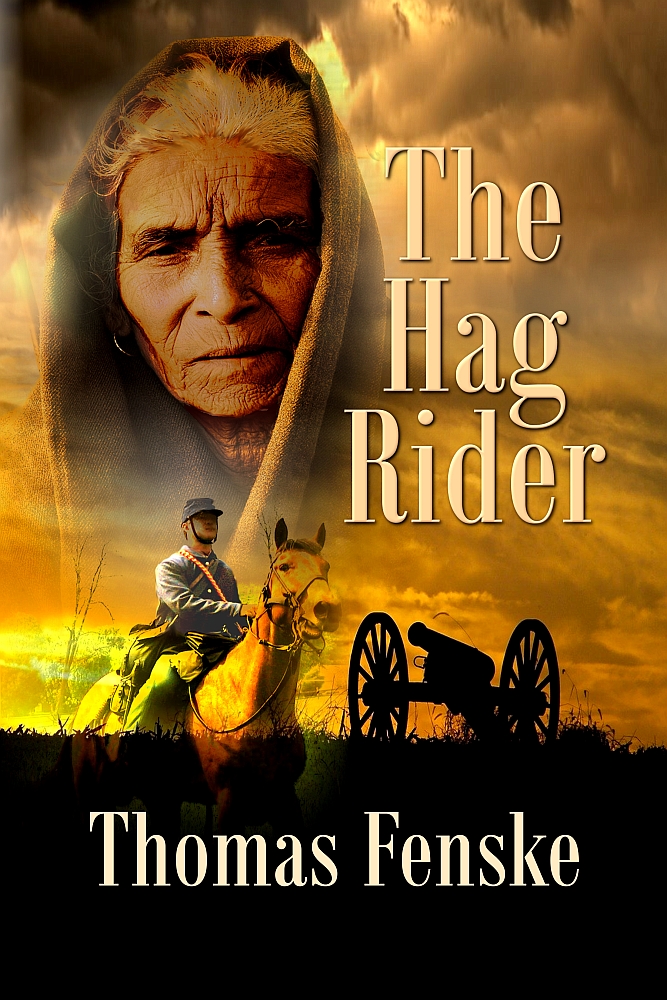
Oops, there was a longer break than I intended due to a computer issue. My new system is up and running, so now I’m back. Last time out I left off with the thought that I started in again on THE FEVER after taking a break to write another draft. That draft was shelved for five years until it became my fourth published novel, THE HAG RIDER, but that is another story. Now, let’s get back to THE FEVER.

I began yet another revision process on THE FEVER and I felt very confident in it. As I mentioned before, previous revisions had ballooned the story to over 130,000 words, but I now had it down to a more manageable 95,000. In late January I felt confident enough to submit my work to a small publisher recommended by one of my NaNoWriMo writing buddies. She’d suggested it the year before but I hadn’t felt confident enough to try, plus that publisher at the time concentrated on their own PDF eBooks. Now they had joined the mainstream and published through a wide range of platforms.

Nothing for a month. Then I got a phone call from an editor. It seems I hadn’t answered her emails.

“What? I didn’t receive any emails.”

I checked my SPAM folder and saw nothing. She finally determined that the problem was on her end. She was calling because she was interested. BUT …

Ah, the dreaded “but” we all hate to hear. There was a major problem. Too much narrative, especially in the section where the main character is preparing for his biggest ordeal. Now understand, THE FEVER is about a character’s singular adventure. It’s a one-person show for the most part. There are minor secondary characters but his lone quest is the entire point of the story. She considered the necessary changes to be fairly trivial and gave me specific chapters to concentrate on.

I had shared the story with a few beta readers and one had complained about the narrative problem. I should have listened to them (listen to your beta-readers!). Another complaint was a minor interaction with a woman he had during one crisis point. It wasn’t believable, several had said. As these thoughts percolated through my mind, I concocted a significant plot revision. I reworked the encounter into a love interest, and the character had someone to work with him during his preparations. This change also facilitated an added twist later in the story, which was also a suggestion of the first beta reader.

It took two more complete revision passes, one to put the changes into effect, and one to make sure all the transitions meshed with the current prose and worked, then I waited for the same beta readers to respond. I’ll never forget the response from one of them. They sent a one-word message. “OMG!”

The editor had almost given up on me, but I explained that in effecting her changes, I had concocted some new plot elements that added a lot to the story while solving the problem she had mentioned. After reading, she said she was impressed. She offered me a contract. It was late May 2015.

Now there are four major paths to getting published. One is the traditional path, where a writer interests an agent or more rarely directly interests a major publisher. For most writers this is just about as accessible as getting a contract to play in professional sports. It is a preferred way, but it’s a long, slow, uphill climb. Second is succumbing to the lure of the vanity press. Big mistake. Don’t do it. You pay and pay and pay and end up with boxes of books in your garage that you have to move to high ground every time it floods. Lately vanity presses try to hide behind a rebranding, calling themselves hybrid publishers. Third is self-publishing. In many respects it costs as much as vanity publishing but you have full control over the end product. You are basically your own general contractor, subcontracting your editing and design efforts. Some do it themselves and many of those give self-publishing a bad rap. Most often your print books are print-on-demand, which isn’t as bad as it sounds and it is good for the environment. The fourth is making arrangements with a small press. Sometimes these seem like vanity presses, but the real key here is that you should never have to front any money. If they want money up front they are a vanity press. A small publisher generally provides editing/cover design/and book design (including uploading for eBooks and print-on-demand), but for a small percentage of the eventual royalties (they use contractors for this). This is what I went with, a small publisher.

The biggest advantage of this was that I didn’t have to front any money. Here’s a dirty little secret in publishing. No matter which one of those four directions you take, your book still has to go through the same journey to publication. It has to be edited and by that I mean not by you. You might be the best editor on the earth but our pumpkin heads don’t work that way: our mind is already translating familiar material and thinking about the next line. Traditional publishers and small publishers use their own people, as do vanity presses, but vanity presses charge you for the effort. In self-publishing you find your own third-party editor, and pay out of pocket as well. This pattern repeats with every other process, including proofing, cover design, and book design. Book design for print has differences from book design for kindle which had differences from other eBook formats. In short, there are a lot of hands stretching out. Traditional publishers bank on you making enough money for them to make it all worthwhile. Small press contractors depend on making a small amount from a lot of books to make it worthwhile. The other two? Well, you pay up front. The thing the traditional presses and small presses know is that you use experience and skill to come up with a good end-product. Vanity presses have your money, they don’t care. Self-published authors, if they are willing to pay for the privilege, can have a good end product as well, but they are prone to skip steps. You can’t skip steps.

So, it’s late May and I have a contract. At first I was told August or September as a publish date, which seemed very soon to me. The contract said July. I called the editor and she confirmed. They had an author pull out and had a hole they needed to fill. For a first-time author, this was definitely going to be a case of throwing the fat into the fire. Stay tuned … more to come (hopefully the computer issues are all in the past.
=======================

Thomas Fenske is a writer living in North Carolina. Check out his webpage: http://thefensk.com

Getting Published-1

Photo by Kaboompics .com on Pexels.com

Well, to get down to the nitty gritty basics, before you can get published or publish your own work you have to write something. And it isn’t good enough to simply write it, after you develop a concept you need to create a structure, then figure out characters, situations, and locales. You need conflict and resolution. You need one or more protagonists and also, ideally, an antagonist. It has to all work together. Your characters need to talk, feel, and be alive within the pages.

I took quite a bit of creative writing in college. Part of it was laziness, if any part of writing can be called laziness. The course applied toward my English degree as an advanced level course and it could be repeated. The coursework was primarily short stories. It taught me one thing: a good short story, and I mean a really good short story, is harder to pull off than a novel. A vast majority of short stories are just that, stories that are short. They can be entertaining, even enjoyable, but most never of convey a complexity that only the best achieve. Still, it’s a good training ground and a novel can be perceived as a huge undertaking that seems insurmountable.

My debut novel. THE FEVER, began as a two page treatment, written on some hotel stationery in the summer of 1986. All of the rudimentary details of the plot are there. Over the years, I started to write it at least four times but I never got more than a few pages in. Once I actually wrote about ten pages. I like to say, “Life intervenes” and I’m sure that is part of the case, but in reality, I just had no idea how to write a novel and I would put it aside out of frustration.

Then one day (for perspective, in late November 2010) I picked up a book, NO PLOT? NO PROBLEM! by Chris Baty. He was the founder of National Novel Writing Month (NaNoWriMo). One could, he said, write an entire novel in thirty days. Nice trick, I thought. But as I read through it, I realized, “You know, I could do this.” As I read about NaNoWriMo, I was mortified to learn that the real event took place in NOVEMBER. I was too late for 2010. But I kept reading. I realized, it isn’t the event, it’s the process. I finished the book in early December and again resolved to myself, “You know, you could do this.” Simple math indicated that all one needs to do is try to write a little less than 2000 words each and every day. I decided to prepare myself and dig in January 1.

The process is simple: you shouldn’t expect to have a fully completed novel in 30 days, but you’ll have a completed rough draft in that timeframe. One of the main things Baty emphasizes in his book is that you can’t edit as you go along. As he says, you have to send your internal editor on vacation. Bogging down on a sentence or a verb or a pronoun is what drives most fledgling writers into the weeds. Don’t get me wrong, it works for some, but it never worked for me. For them each sentence is a masterpiece, carefully place one after the other until you have a … well, like I said, I tried that four times with THE FEVER. Bogged down every time. I endeavored to give this different process a good try. In retrospect, knowing what I know now, I don’t know how you can get chapter two just perfect when in reality you have no idea what’s really going to happen in chapter 23!

It was my New Years Resolution for 2011, to have a rough draft by the end of January. Oddly, I decided NOT to write THE FEVER. This was, after all, a test. I figured THE FEVER was my best idea, but I had other ideas. Even though I had worked out a lot of the plot and different elements I wanted to explore in that story over the years, I didn’t want to waste my best idea on this process if it didn’t work. I couldn’t bear another failure. So I picked a harmless project I had bandied about. I had less of an idea of what I wanted to do, but according to Baty, it really didn’t matter. “Pantsing it” he called it; flying by the seat of one’s pants. I had a locale based on some autobiographical journaling I had done earlier that year, a marvelous old building where I used to work in an older area of downtown Houston. The gist of the storyline was somewhat autobiographical: write what you know.

Get this: I found the process incredibly creative. I created bullet points of a rudimentary outline but as the story progress, I left that far behind as I hammered out sentences intent on making my daily word counts. The story told me where it wanted to go. I became consumed with it, and woke up each morning with a fresh new desire to find out what happened next. When I reached the end, I was elated. I’m still proud of that manuscript, set in 1972 and populated by the hippie-types I knew in my youth. Oh, it’s pretty awful and needs so much work, although I did a little revision work on it later that year, I’ve never completed the revision work. But it still has a soft spot in my heart. One other plus: I actually achieved my New Year’s Resolution!

I turned around and did it again in November, with yet another story idea. I still avoided THE FEVER, I wanted to prove it wasn’t a fluke. I had similar results. Both of the first two manuscripts were written in first person. The original actually works in first person, but the second one should have been third person. I’ve been thinking about picking it up and working through it. It will be a lot of work.

By the next November, I was ready to dive into THE FEVER. I was so pleased with the result, I turned right around and started revisions after I finished the draft. I loved the story. This was when I found out one minor detail: I didn’t know how to revise a story. Oh, I knew I needed to clean things up, expand character development, and add more details. In the first couple of revision passes I did way too much and added extraneous details and descriptions that had little to do with the story. My 50,000 word draft ballooned to 130,000 words. It was bloated and heavy. It had lots of good stuff, but many things didn’t apply to the real story and true to the first two manuscripts, far too much autobiographical information. Some of it applied to the core storyline quite well, but I realized 130,000 words was far too much for a debut novel, so as I got better at reviewing my writing, I cut and honed. I call this crafting the story.

I eventually allowed a few trusted souls to read the drafts and got some valuable feedback. I kept plugging away. I basically skipped the next two NaNoWriMos, well, I cheated and worked at revisions one time and worked through my journaled autobiographical info another time. But NaNoWriMo is fun, you can buddy up with other writers, track each other and encourage each other. Picked a few long term friendships there. One of those contacts suggested I approach her publisher. I didn’t at first, because I didn’t think it was ready and her publisher seemed to be mostly interested in Romance books.

I was coming up on the third NaNoWriMo since I’d written the draft and, to be honest, I was burned out. One of my NaNo buddies strongly suggested I just dive in on a new project to clear my mind. It almost seemed like I was cheating on my novel, but I did it. Totally fresh idea, completely different story. I hammered out the word counts just like the other three and before the end of the month I had another rough draft. I liked it, and thought it had a lot of promise, then I shelved it and dug back into THE FEVER. My mind was ready to take it all the way.

I’ll leave off here. Next time, I’ll relate the next stages of getting it published.

===========================

Thomas Fenske is a writer living in NC. More information about him and his books: http://thefensk.com

A Win is a Win!

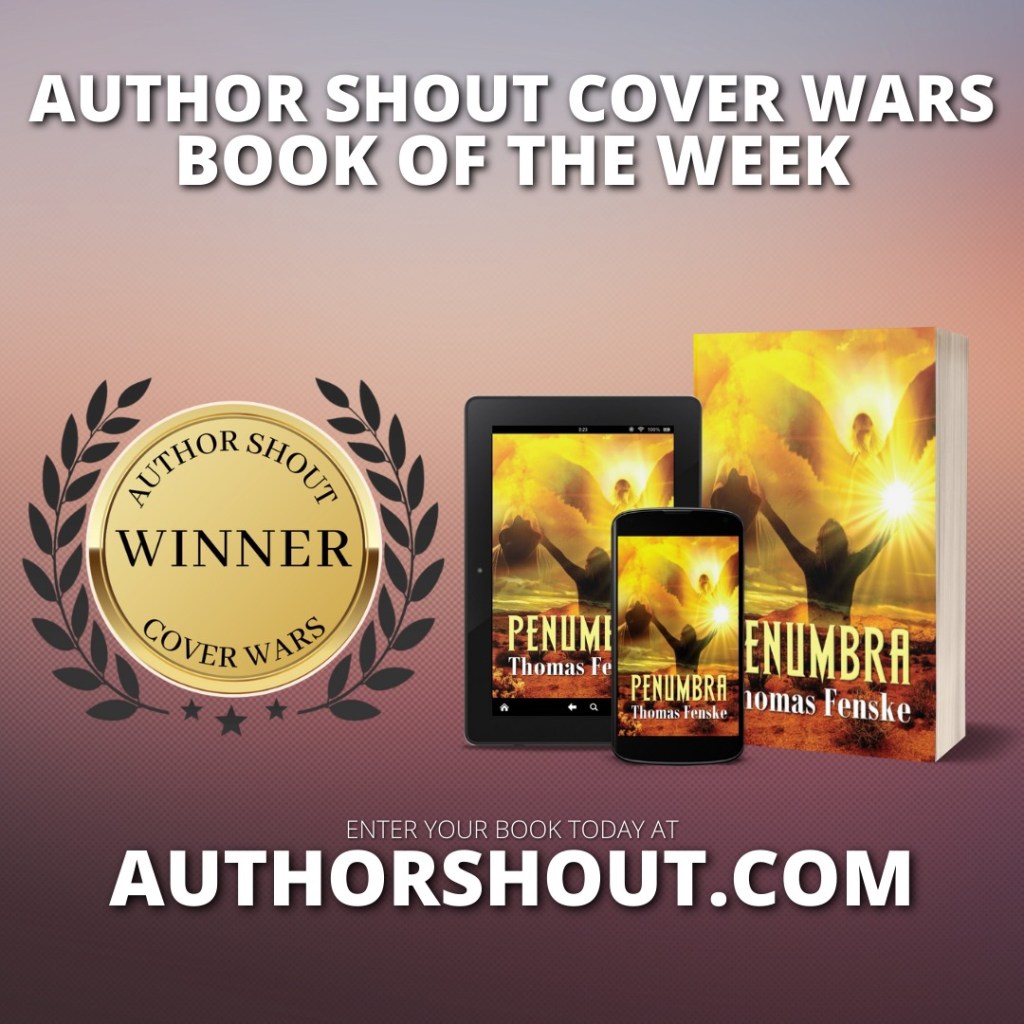
Yes! I entered the cover of my last book, PENUMBRA, in Author Shout’s weekly Cover Wars competition and managed to win over several other very nice covers.

To celebrate this win, I’ve put the kindle edition of PENUMBRA on sale for the next week. It’s a great chance to pick up a good read for 99 cents (99p in the UK). Get it here:

https://www.amazon.com/dp/B08D7267W7/

It’s the fourth book in the Traces of Treasure series but is a good tale all by itself.

======================

Thomas Fenske is an author living in North Carolina USA. http://thefensk.com

Not Quite A Year

It’s been a while, but this sleeping cat has awakened and he’s decided to gear up the old blog again in anticipation of his upcoming publication.

In my last post, I mentioned a bit about the new project,, HARMON CREEK. There will be more about it coming later. The best news is that it will be released in June of this year. That gives me not quite three months to get off my duff and dust off my blogging and marketing skills.

To get started, I’ll post about the story, sure, but also about the marketing and publishing process. For today, I’ll say that part of the delay in posting was due to my decision to actively pitch to agents and other publishers. It’s not that I’m dissatisfied with the publisher of my first five novels, it’s more along the lines of this was something I’d never even tried. Understand, querying is a lot of work. I sent out dozens of queries but only had one positive response and unfortunately that was received after I had all but given up on the process and submitted to my current publisher. Ah, well. I gave it the old college try (although in my creative writing classes in college we never covered queries).

What I learned, was that you should definitely do your homework and pay close attention to what individuals say they are interested in. Even more important, stick to the guidelines they provide. I know that likely half of my queries failed because I didn’t notice the term “double spaced” (which drastically reduces the amount of text they are requesting) and although I personally think that is so “pre-word processor” — well, the rules are the rules. My bad.

The what, though, that is where a lot of prospective authors fail. The category of “what” is a moving target and can change with the wind. It is whatever an agent thinks publishers can be convinced THEY can make a lot of money on — if they pick this manuscript. Usually it follows currently successful trends and has very little to do with the actual quality of your story or of your writing (although a negative impression of either or both of those can sink you pretty quickly). I won’t comment on the “what” I perceived, but take under advisement: I suspect tails of survival from war-torn Ukraine will soon be a must-have on the lists of agents and publishers. All I’m saying is — pay attention and don’t get your hopes up if your hard work falls outside the current trends.

All that said, smaller publishers, although they still want to make money, can be a little more forgiving in the trend department. And, who knows? YOU might be the next trend setter. I can say with a great deal of authenticity I was dressing grunge in the early 70s long before grunge became a trend. I still do, for that matter, but that’s another story entirely. Oh, and never forget self-publishing, but you can’t skip the same steps publishers take to prepare a manuscript for publication. More on that later as well.

Anyway, after almost a year, I’m back, baby and ready to share.

===============================

Thomas Fenske is a writer living in North Carolina USA. More info about him and his work: http://thefensk.com

New Release!

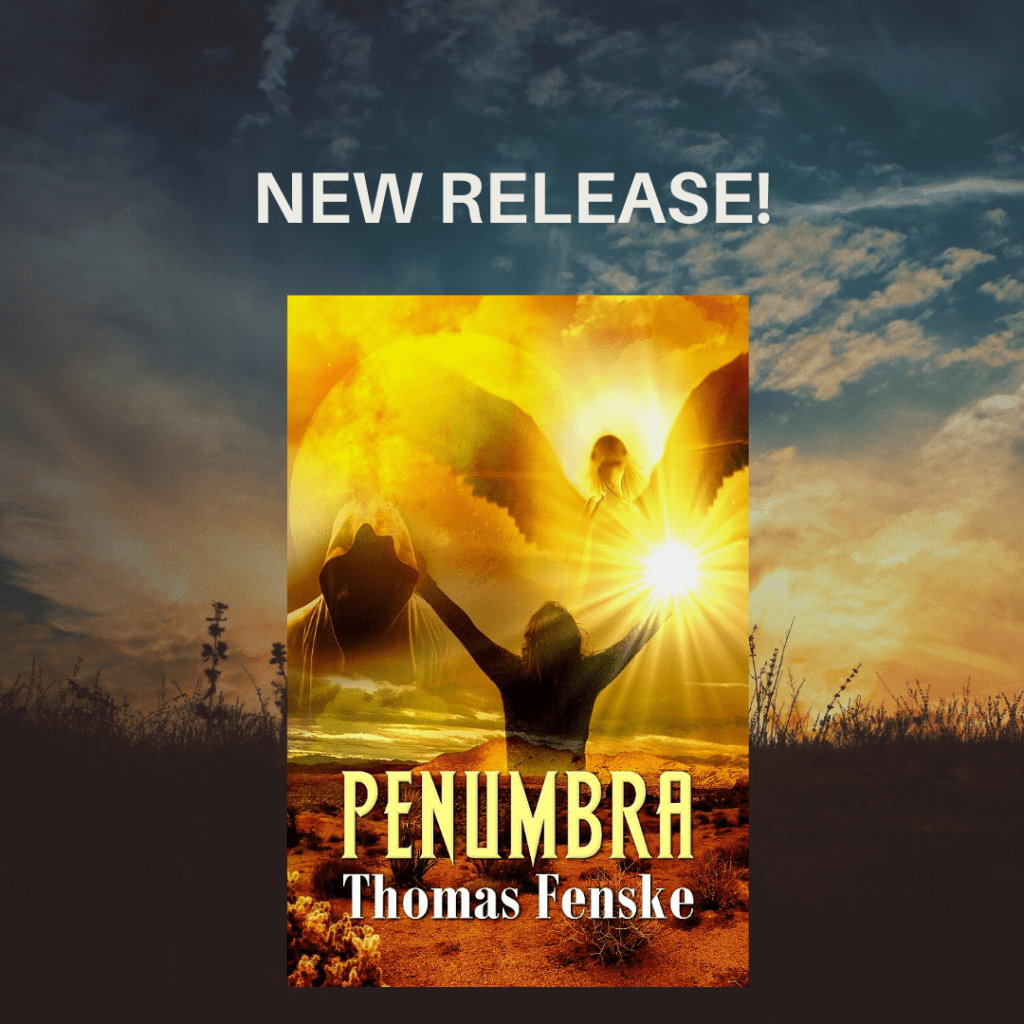
If we were trying to have coffee today I’d no doubt be all excited! It’s release day for my latest novel. PENUMBRA.

Some people make a big deal about release day. For me it is a bit anticlimactic…okay, it’s official. Distribution is a little wonky today too. This month my publisher is expanding the print copies into a new supplier. We have been exclusively Amazon for a while. Now Amazon will provide print copies sold on its platform and the new supplier will be able to more easily provide copies to bookstores and libraries.

Of course with anything new, the publisher had no real guidance into how long the new books would be in limbo. When they are available, they’ll be available. To make matters worse, the print copies on Amazon are delayed as well.

It’s a good thing I didn’t plan anything big for release day. Today’s big “release” activity? I cut the grass!

Ah, but you can still buy the Kindle edition today. https://www.amazon.com/dp/B08D7267W7/

============

Thomas Fenske is a writer living in North Carolina. Check out his web page at http://thefensk.com

BookReview: Blacktop Wasteland

blacktopwastelandI don’t do a lot of reviews on this blog, but this reminds me that I really should do more.
I just finished reading Blacktop Wasteland by Shawn Cosby. I received a free electronic copy provided by the publisher (Flatiron Books) and this is my honest review.

I’ve known Shawn for only a short while. I first met him at a local “Noir At The Bar” event where we were both sharing readings for the crowd. I told my wife at the time I thought he was the best writer there. Now that I’ve finally read Blacktop Wasteland, I’m happy to report that my first impression was right on the money.

To say I liked Blacktop Wasteland would be an understatement. I loved it. The book is crime fiction and it is a gritty and realistic example of that genre. I write mostly mysteries. These two genres are cousins, and they both give the reader a peek at similar issues, but each uses a different focus. My experience with mysteries provided a good backdrop for enjoying this story because so many aspects of it were sub-mysteries of their own.

Cosby waltzes around plot structures in both standard and unique ways, the way Fred Astaire could dance an amazing solo, but then pull a mop into the mix and make you think the mop was dancing just as well as he was. Cosby makes effective use of flashbacks as well, and they weave in and out of the story the way Beauregard weaves in and out of the mess he has made for himself.

I am wary to share too many details because I in no way want to spoil this story for you, but in short, Beau has done his best to put a criminal past behind him and forge a family life on the straight and narrow. But the universal truth “life is hard” rears its ugly head and he figures just one more “job” might provide the easy money he needs to right his ship for clear sailing.

Then another more pertinent universal truth pops up: there is no such thing as “easy money.” It’s a deep well and Cosby effectively plumbs the depths of that well just until you think it can’t go any deeper, but you have to keep feeding the line because neither he nor Beau has reached the bottom yet.

Blacktop Wasteland is fast-paced and the plot employs a sinister intricacy that slides into your brain the way your feet can slide into a comfortable pair of old slippers. But don’t get too relaxed … you will need to strap on your reading comprehension hat real tight because even the tiniest of details may pop up to surprise you later. Cosby zinged me in this way several times and even made me laugh out loud more than once.

Be warned, the book is about lowlife individuals who lurk on the dark edges of society, so there is a bit a language, but I thought he used a measured amount that fit the dialogue. It’s a crime thriller so there’s violence too. If you are turned off by either of these I’d have to say, everything fits the story and this story is well worth reading on so many other levels. At the least, you should revel in experiencing this breakout novel of a gifted writer.

As a writer myself, I want to hate Shawn because I don’t need this kind of competition, but I can’t hate him, not at all, simply because I love his insight and skill so much. Look for Blacktop Wasteland in mid-July. If you can catch him reading at a bookstore or a local “Noir At The Bar” — catch him there, his readings are not to be missed. I’ll finish by just saying: WOW! Just WOW! A well-deserved Five Stars!

I’m sure it will be sold all over the place but an Amazon link is easiest right now … put this on your TBR list. Blacktop Wasteland.

=====================================

Thomas Fenske is a writer living in North Carolina. His most recent novel, THE HAG RIDER, is available at Amazon. Be on the lookout for his mystery thriller PENUMBRA, coming in August.

Are You Feeling Lucky?

what's so lucky about lucky strike_What’s so lucky about Lucky Strike?  Considering the theme of vengeance and the ensuing deep-seated criminal conspiracy, not so much.  In fact, we see several crimes in the pages, including threats, kidnapping, unlawful imprisonment, torture, and murder. What’s it all about?  Well, that is the big question, isn’t it?
The story doesn’t depend entirely on information from the previous two books in the Traces of Treasure series, but having that firm background certainly doesn’t hurt.  Of course, Sam Milton returns along with his paramour Smidgeon Toll.  Lance Norton, one of the main characters in the second book, is part of the story as well. The story also introduces an old lawman, a private investigator named Mule Hollis, who is following a parallel trail that leads directly to our heroes.

Still, I think a fledgling reader can enjoy the book as a stand-alone but here is a brief primer. The first book involves Sam Milton’s long obsession with a lost Gold Mine. As he becomes increasingly desperate, he gets careless and the book follows his struggles with the situations he finds himself in. The second book follows up with a seeming curse that throws a cloud over all the characters and introduces several ghostly associates who have a deep interest in what transpires, as one person after another falls victim to a hidden killer.

So much happened in the second book, it had to have made the news.  The bad thing about news coverage is that it sometimes attracts unwanted attention.  That’s what happens in Lucky Strike and the repercussions are profound.

An innocent search for some answers to what at first seems to be a small mystery results in a series of desperate acts and the villainous activities eventually involve everyone as they all scramble to make some sense of the situation.

Wait. What about the ghosts?  They’re back as well, but they are also confused by the dire situation.

Various twists and turns lead Smidgeon on a long quest from Texas to North Carolina,  collecting a confusing array of clues she must somehow piece together.

All the while a mysterious stranger creates havoc as he follows his own trail of vengeance, crime, and destruction.

Add it all up and … well, it doesn’t sound too lucky, does it?
Do you think you can figure it out?
Feeling lucky?

============================================================

Find out for yourself … experience the Traces of Treasure

Book 3: Lucky Strike
Book 2: A Curse That Bites Deep
Book 1: The Fever

All three are available in both eBook and Paperback and they are also available on KindleUnlimited.

The Story So Far …

Thomas Fenske (1)As we progress into fall I always fall back to the basic plot of my debut novel, The Fever.  It starts at just about this time of year.  Sam Milton, the main character, is hiking out of the desert on a cool October night, lamenting his failure to find his elusive goal.

As we find out, his search in the far reaches of western Texas is complicated by fears of the unpredictable weather so he limits himself to a few months in the Spring and a few months in the Fall.  He’s ready to hang it up for the year, and as his frustrations mount, perhaps forever.

Then, by chance, a friend’s casual observation puts everything right back on the front burner.  That’s what the story is really about, pitting his obsession against his worries about changes in the weather.  And the story does not disappoint.  One reader told me she had to get up and put on a sweater during a described winter storm Sam endures during his quest.

The stories are set in the 1980s, so there is no instant access to weather reports, and no way to call in air support if things get dicey, and he’s traveling through a sparsely-populated area, so even the car radio is unreliable.

So, that’s why I think this is a great time of year for you to walk a few miles in Sam’s dusty boots. Take a chance, maybe you can solve the cryptic riddle along with Sam. But I have to warn you, like Sam, you will no doubt catch THE FEVER.

=============================================

If you want to explore Thomas Fenske’s world, peek into the Traces of Treasure Series … Book 1 is The Fever, Book 2 is A Curse That Bites Deep, and Book 3 is Lucky Strike.  If you’re hungry, the companion cookbook might strike your fancy as well.

WeekendCoffee Video

coffeeshareIf we were having coffee today, I’d pull out my phone and show you my latest book trailer.

You’d probably say something like, “Book trailer? You mean, like a bookmobile?”

LuckyStrike-WEBNo, it is a video promotion for my upcoming book release.  Book trailers were all the rage a couple of years ago, but I haven’t noticed too many of them recently.  I have two trailers for both of my other books, one I bought, the other three I cobbled together. The first one I put together myself was made by putting tother music and text in a PowerPoint presentation.  I made the last two using the same app I used this time. Like I said, all of them have just been cobbled together.

It’s a good metaphor.  Generally, I gather a number of static images that hopefully relate to various themes in the book, then assemble them together with brief phrases that hopefully convey content.  I can’t take credit for the production. It’s all part of an app on my iPhone called iMovie.  The music, the backgrounds, and all the timing is part of a “trailer template” they offer.

The “free use” photos I used were chosen because I thought they reflected aspects of specific book content. I began by inserting them into the template. There were already words in the storyboard but those are easy to replace. You have to be careful with content as the splash phrases need to fit together but you can’t be too wordy or the text size is reduced. Brevity also helps with visual appeal … a viewer has to be able to read it quickly. You can play it at any time while to see if it works or if you need to tweak.  There is a lot of tweaking. I try not to overthink it.  Most of my tweaking is with the text content.

I don’t know that any of my trailers have generated sales, but I have to admit that they are a lot of fun to put together.  With the book release coming up, I’m excited to have it up on youtube to use in pre-release promotion.  You know, like this posting!

Oh, the link!  View my trailer here:  https://youtu.be/yMXbZoBdIx8
Be sure to leave feedback and if you like it share it!

How about you? Did you do anything creative this week?

========================================

Thomas Fenske is a writer living in NC.
His latest novel, LUCKY STRIKE, is coming out in a few weeks.
Get more information on it and his other works at http://thefensk.com