Impacts

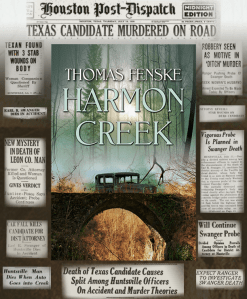
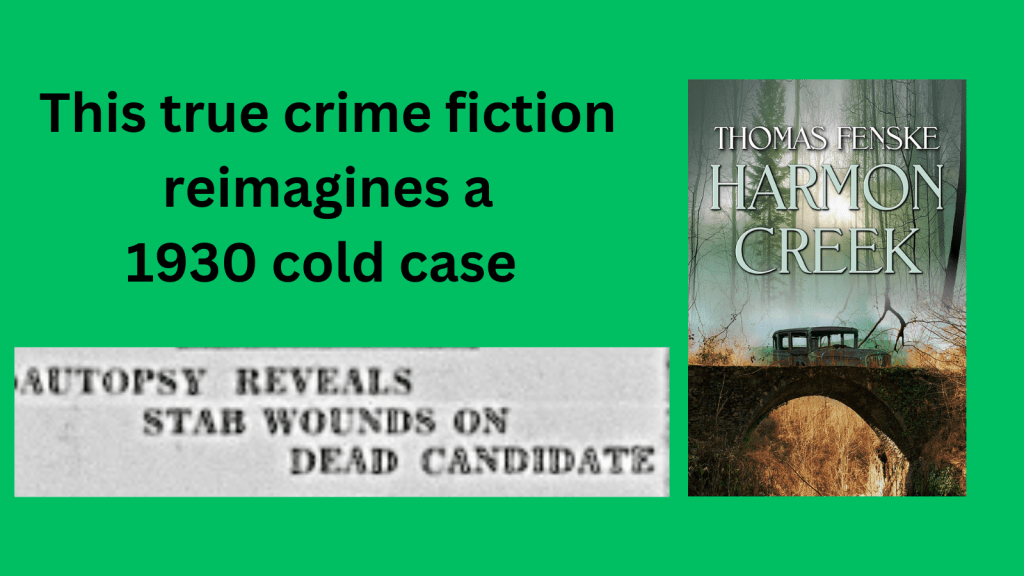
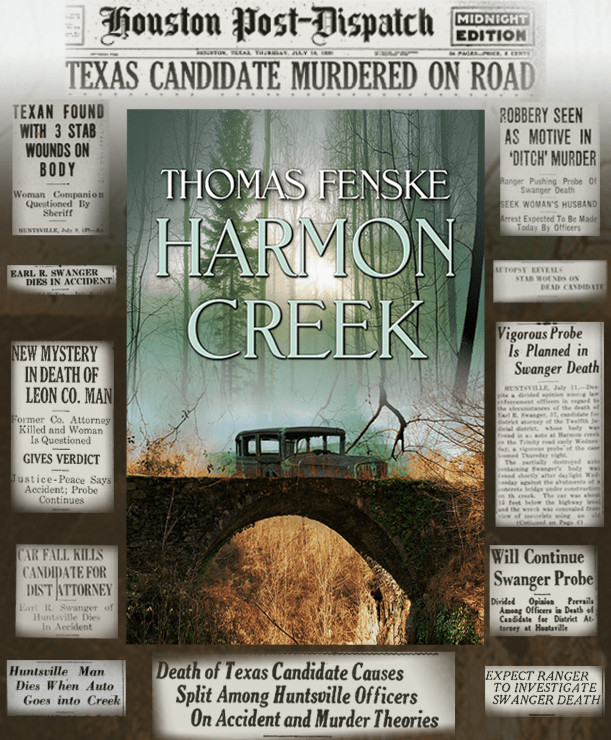
I created this graphic to promote my true-crime fiction HARMON CREEK. The story is written around a true event, the death of my wife Gretchen’s great uncle in 1930. Earl Swanger was a candidate for DA in a rural Texas county when he died mysteriously two weeks before the primary.

The death was officially declared an accident within 48 hours despite the three stab wounds found during the autopsy. He was found in his wrecked car near a bridge that crossed Harmon Creek.

Her family was devastated and always felt it was murder. The novel gives a fictional explanation for the events I uncovered through my research, as I attempt to answer the many unanswered questions that arose while reading the newspaper accounts

With the holidays approaching, I’m reminded of a bit of family history I read after the book was published. Gretchen found a family letter, written by Earl’s sister Pearl to Lily May Swanger, Earl’s widow. Pearl considered her sister-in-law to be her sister for the rest of their lives.

This letter was written Christmas Eve 1930, not six months after Earl’s death. Like most letters of the time, it’s full of chatty nuances about seasonal preparations and news of family members. But a few times she mentions the death.

Once, it’s to say she tries not to dwell on it and they shouldn’t mention it, evoking Depression-era stoicism. But she goes back to it again. A neighbor graciously lent her family a radio while the neighbor was out of town. She mentioned listening to a spiritualist’s radio show, and wishing she could contact him to ask him about Earl.

She then says something startling.

“I don’t think it was that woman at all, I think it was all political.”

In my research, one fact stood out. There was a woman mentioned, having at one point been in the car shortly before the ‘accident,’ but, she says, she got out to ride with another friend she realized was following them. Well, that was the first story. It changed two more times.

This woman is never mentioned by name, but one thing is obvious: she and her ‘friend’ were the last people to see Earl Swanger alive. Pearl’s little statement, validated my fictional premise, although in extension I figured the woman and man were players in the political intrigue that resulted in Earl’s death. That’s how I wrote it.

So this season, I’ll be thinking about Gretchen’s grandmother and great aunt’s continued grief during that 1930 Depression Christmas.

What really happened down by Harmon Creek? Read the book.
https://www.amazon.com/dp/B0B2JQ96N5

94 Years Ago Today

On July 9, 1930, an apparent one-car accident resulted in the death of a local attorney in Walker County, Texas. 

At the time of his death, Earl ‘Buddie’ Swanger was a candidate for district attorney in the upcoming primary election. His death was officially declared an accident within forty-eight hours, despite the medical examiner’s mention of stab wounds and reports of the mysterious involvement of a woman and man, both unnamed. The woman had apparently accompanied Swanger as he traveled to a campaign event. The woman admitted she had been a passenger in his car because she needed a ride. According to her first statement, she requested Swanger stop and let her out when she became aware her original ride was following them, but her story changed several times. Later statements involved alcohol and accusations of impropriety.

Swanger’s body was discovered in his car, which had rolled down an embankment on the approach to the new bridge spanning Harmon. Creek. This bridge was still under construction and stood adjacent to the old bridge. The local sheriff theorized the ‘stab wounds’ were the result of protruding nails from a smashed railing. The medical examiner begrudgingly changed his determination of murder under protest.

Although this candidate’s death generated a lot of statewide news interest, and the state dispatched a Texas Ranger to investigate, the woman and man were never named, and their changing stories were never fully corroborated. The news story lingered for a couple of weeks, then died just as surely as poor Earl Swanger had died on that steamy July night. 

Earl Swanger was my wife’s great-uncle and this story never left his family’s memory. Earl Swanger doted on his wife and was a chaste and sober man in all respects. Family letters confirm this. The presence of the woman in his car was out of character for him so there must have been some seemingly innocent explanation. Family letters also point to political intrigue and the family had no qualms about calling this a murder. It was 1930 and there is no reason to doubt the local political machine was corrupt and this was what had prompted Earl to run for office. But people in this time also didn’t push back as much as they do now. Life went on, with or without justice.

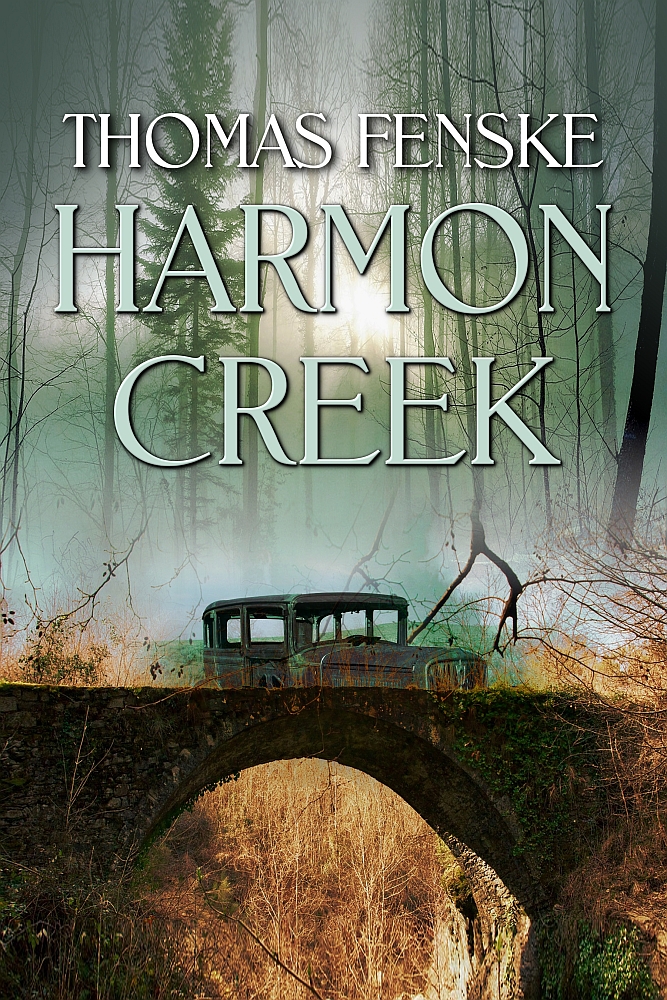
My novel HARMON CREEK takes a new look at this incident, creating a fictional backdrop to explain many of the questions that arose in my mind while researching the news accounts of the day. My fictional premise revolves around motive: I think the murder was likely an incidental result of a different plan entirely, a plan that went very wrong. In this fictional account, the corrupt incumbent, intent on holding onto his personally lucrative office, sought to subtly discredit his opponent with an illusion of impropriety, recruiting a small-time petty crook to do just that, lured with the promise of deferred prosecution. 

But these things are never quite as simple as they seem and after the woman managed to get into Swanger’s car using some ruse, something went wrong. Prostitutes of the time were often armed with ice picks. They were small and light, easily concealed, and easy to use. The DA’s coercion was a strong motivator, so fear of failure would have been enough motivation for her to panic and then threaten Earl to keep driving, then to lash out at him when he balked. This certainly would have caused Earl to swerve and stop. Her boyfriend, part of the conspiracy and following closely behind, would have stopped as well and it is easy to assume a confrontation ensued. Of course, it did not end well for poor Earl Swanger, leaving these two with one more problem: What do they do now?

Stage a wreck and then drive off, of course

The thing about conspiracies is the fact that what the planners want most of all is to cover their tracks. Complications must be dealt with. The actors are criminals after all, and more crimes are the most expedient solution to criminals, especially regarding loose ends. And they didn’t even know about the eyewitness. Yes, there was an eyewitness, Claude, a local black man, who was a recent client of attorney Swanger. When the two murderers drive off Claude rushes to aid the mortally wounded Swanger.

Before he dies, Swanger implores Claude to protect his wife, and to keep quiet about what he saw, because he’ll be blamed for the death if he comes forward with what he saw. 

This is where the story in HARMON CREEK really takes off: the death of Earl ‘Buddie’ Swanger was a catalyst for what was to follow. True crime or crime fiction? How about a little of both?

HARMON CREEK is available in all eBook formats and is also available in paperback. Look for it on Amazon or you can get your favorite bookstore to order it.

https://books2read.com/u/mYQPdw

How We Got Here

The story behind the story

The basic premise of Harmon Creek revolves around the death of Earl Swanger, a Texas attorney seeking political office in 1930. His quest for the office of District Attorney was cut short when he ended up dead next to an under-construction bridge.

I first heard about this from my wife Gretchen. Earl Swanger was her great-uncle, he was the brother of her maternal grandmother. She grew up with stories about Earl, or Buddie as they called him. The family’s opinion definitely tended toward a politically motivated murder.

When I delved into the case by looking for existing newspaper accounts of the incident, I was surprised at the apparent flurry of these articles. The first headline that caught my eye was from the Bryan Daily Eagle, July 10, 1930:

HUNTSVILLE ATTORNEY, CANDIDATE FOR
DISTRICT ATTORNEY FOUND DEAD UNDER
BRIDGE, WAS STABBED, AUTOPSY SHOWS

That’s interesting enough, but let’s take a look at the accompanying article:

———————————-

HUNTSVILLE, July 10 AP

An autopsy performed on the body of Earl R. Swanger, 37, candidate for district attorney, found beneath his wrecked automobile, under the Harmon Creek bridge, revealed three stab wounds, officers announced late Wednesday.

Dr. J. L. Martin, who conducted the investigation, said one of the wounds was in the chest, one above the collar bone, and one on the shoulder. He said a large blood vessel had been severed by one of the cuts and that Swanger had bled profusely inwardly.
Dr. Martin said the wounds could have caused Swanger’s death.

The coroner’s verdict was withheld pending a further investigation in connection with Swanger’s death.

Swanger, who was formerly county attorney of Leon county had been electioneering in Trinity county and was en route home when he was killed, officers believed. At first, it was thought his car had plunged from the bridge accidentally.

HOUSTON, July 10 AP

A woman who left Huntsville Tuesday night with Earl R. Swanger in his car for Trinity was questioned late Wednesday at her home in Trinity by Sheriff N.L. Speer.

Swanger’s body, with three stab wounds, was found beneath a wrecked car near Huntsville this morning.

She said she had been to Huntsville on business, and had accepted Mr. Swanger’s invitation to ride back to Trinity with him.

She said that en route to her home a man who she knew drove up behind them, and that she decided to complete the trip with him instead of Mr. Swanger. She said that she got out of the car and that Mr. Swanger proceeded to Trinity.

She did not even know that Mr. Swanger was dead until informed by the sheriff, she said.

The county attorney’s force, headed by County Attorney R.T. Burns and Justice of the Peace R.J. Camp, in addition to Sheriff Speer and his deputies, are conducting a probe into the candidate’s mysterious death.

————————–

You can see that this story was pulled from the Associated Press news feed. I found many similar articles from small-town newspapers in the Texas area. The death of a political candidate was big news. It even got a huge headline in The Houston Post-Dispatch: TEXAS CANDIDATE MURDERED ON ROAD.

All the early articles had the same basic information: apparent stab wound along with a mysterious woman and man. By the next day, it was reported that the sheriff overruled the other county officials and pushed for the official explanation of the death to be ruled an accident. I think this was when I first started to realize that things were very fishy with this story. His reason? He said the wounds were caused by nails from the construction. This ruling was less than forty-eight hours after the death.

There were other details, to be sure, but they were inconsistent throughout the stories. In a couple, the woman claims she “didn’t kill him but if she could have she would have.” There was also a mention of a possible previous altercation with a man from Houston. I know enough about journalism to know that newswire articles were often embellished, especially at the time.

The most intriguing aspect of the story was how quickly it faded from the public eye. The story disappeared from the news less than two weeks after it was first reported. I mean, gone, disappeared, kaput, nada.

I’ve written murder mysteries, and this seemed to me to be a fertile ground to be explored. Don’t get me wrong, there’s a true story in there too, but I’m a novelist, not an investigative journalist. So, I dusted off my plot generator and percolated all the known facts into what I think is believable crime fiction: Harmon Creek.

More next time!

========================================

Thomas Fenske is a novelist living in North Carolina. Look for Harmon Creek in June, 2022.http://tfenske.com