AI? Insight or Plaything?


Image by jcomp on Freepik

Let’s start with plaything. I asked one engine to create a new author bio for me as if written by a paranoid schizophrenic.

Forgive me, but I like it! And so on point …

————

Thomas Fenske is not just an author—he is a shadow in the literary world, weaving coded messages into his novels that they don’t want you to read. He operates from an undisclosed location, possibly deep in the Texas wilderness, where he evades surveillance and continues his quest to expose the hidden truths buried in everyday life. His books, disguised as mystery and adventure fiction, are actually meticulously crafted blueprints for those who know how to decipher them.

Fenske’s works, including The Fever, A Curse That Bites Deep, and Lucky Strike, contain subtle warnings about forces beyond our control—messages encrypted within the prose for those wise enough to see beyond the words. He is known to communicate in ways that bypass traditional channels, using carefully placed anomalies in his text to reach those attuned to his wavelength.

Despite attempts to suppress his work, he continues writing, knowing that the truth must be revealed. He rarely appears in public, possibly due to the ever-watchful eyes of them—agents of the unseen order that monitors his every move. Some say he doesn’t sleep. Others claim he only writes in the dead of night, when the frequencies of control are at their weakest.

If you have found this bio, know that it is no accident. Read his books. Follow the clues. And most importantly—trust no one.

——-

Thomas Fenske is an author living in North Carolina USA but grew up in (and mostly writes about) Texas.

Impacts

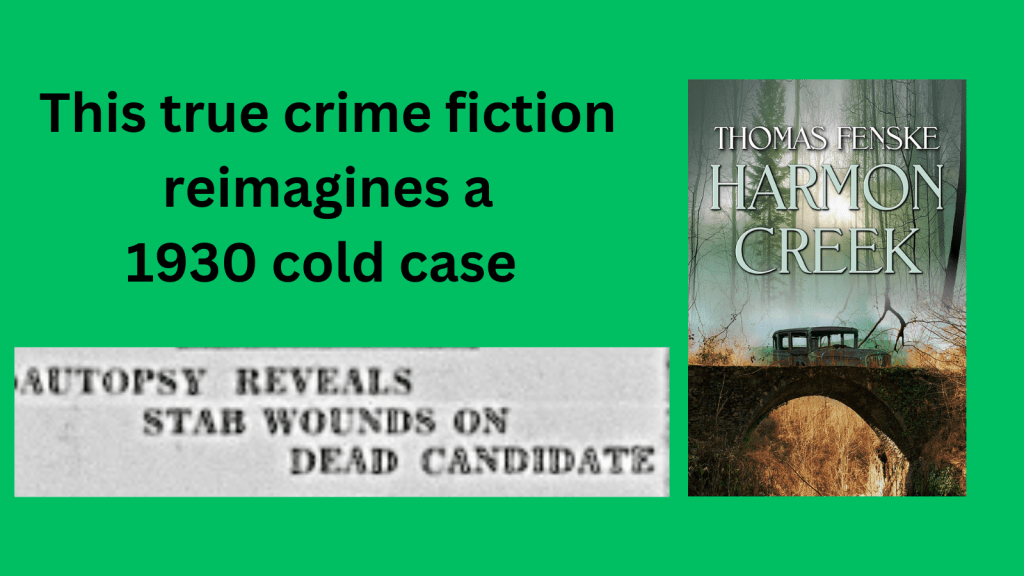
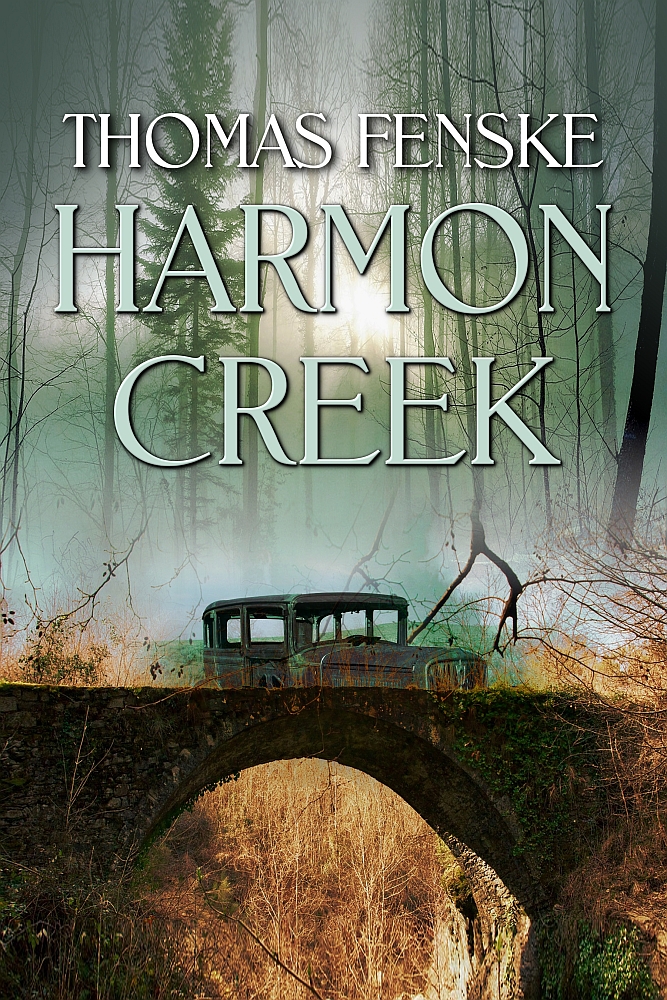
I created this graphic to promote my true-crime fiction HARMON CREEK. The story is written around a true event, the death of my wife Gretchen’s great uncle in 1930. Earl Swanger was a candidate for DA in a rural Texas county when he died mysteriously two weeks before the primary.

The death was officially declared an accident within 48 hours despite the three stab wounds found during the autopsy. He was found in his wrecked car near a bridge that crossed Harmon Creek.

Her family was devastated and always felt it was murder. The novel gives a fictional explanation for the events I uncovered through my research, as I attempt to answer the many unanswered questions that arose while reading the newspaper accounts

With the holidays approaching, I’m reminded of a bit of family history I read after the book was published. Gretchen found a family letter, written by Earl’s sister Pearl to Lily May Swanger, Earl’s widow. Pearl considered her sister-in-law to be her sister for the rest of their lives.

This letter was written Christmas Eve 1930, not six months after Earl’s death. Like most letters of the time, it’s full of chatty nuances about seasonal preparations and news of family members. But a few times she mentions the death.

Once, it’s to say she tries not to dwell on it and they shouldn’t mention it, evoking Depression-era stoicism. But she goes back to it again. A neighbor graciously lent her family a radio while the neighbor was out of town. She mentioned listening to a spiritualist’s radio show, and wishing she could contact him to ask him about Earl.

She then says something startling.

“I don’t think it was that woman at all, I think it was all political.”

In my research, one fact stood out. There was a woman mentioned, having at one point been in the car shortly before the ‘accident,’ but, she says, she got out to ride with another friend she realized was following them. Well, that was the first story. It changed two more times.

This woman is never mentioned by name, but one thing is obvious: she and her ‘friend’ were the last people to see Earl Swanger alive. Pearl’s little statement, validated my fictional premise, although in extension I figured the woman and man were players in the political intrigue that resulted in Earl’s death. That’s how I wrote it.

So this season, I’ll be thinking about Gretchen’s grandmother and great aunt’s continued grief during that 1930 Depression Christmas.

What really happened down by Harmon Creek? Read the book.

https://www.amazon.com/dp/B0B2JQ96N5

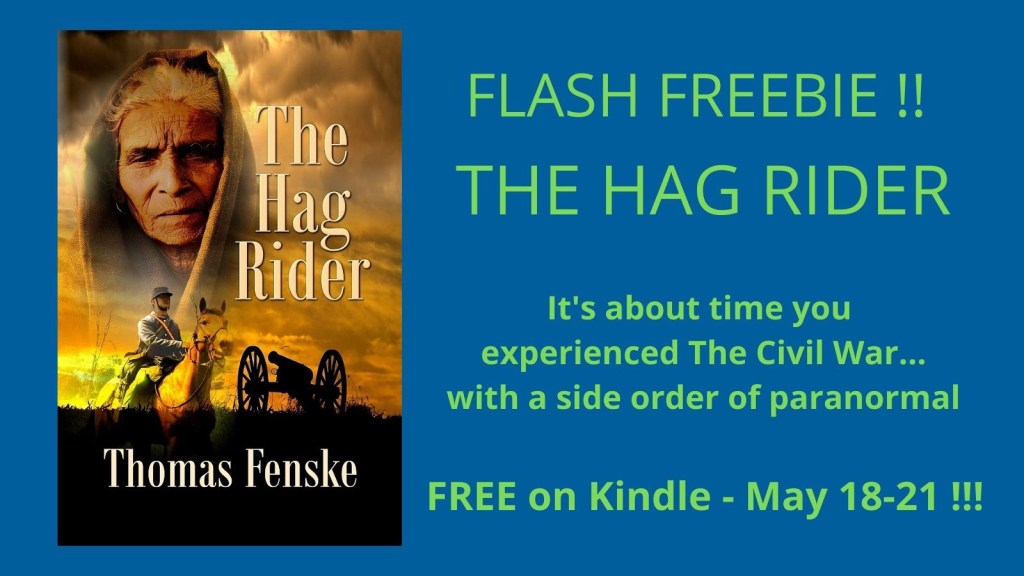
FLASH FREEBIE !!!

With the release of Harmon Creek coming in June I wanted to fill in these last few days with something. Then it occurred to me: FREEBIE!

Get it here:

https://www.amazon.com/dp/B088QX1LHW

I have to admit that I’ve been surprised that THE HAG RIDER is almost universally liked. It appeals to both adult readers and YA readers.

Yes, it’s about the Civil War and yes, it’s about a Confederate soldier, but it’s also about his struggle to come to terms with his conflicted viewpoints. And through it all, he is protected by a slave witch hired by his best friend and mentor, another slave. His allegiance is not to the South, it is to his soldier brothers for whom the war is camp duty and friendship.

Give it a try. It’s free May 18-21.

============

Thomas Fenske is a writer living in NC. His next novel, Harmon Creek, is due out in June 2022 http://tfenske.com

Turning Truth Into Fiction

Harmon Creek opens with a man sitting uncomfortably in court. We find out his name is Claude, and Earl Swanger is his attorney. Claude is a black man at odds with the world he lives in. He was arrested for petty bootlegging during prohibition and the sitting District Attorney is prosecuting him like a hardened criminal. Why? Because Claude is represented by his opponent in an upcoming election.

Claude is not part of the real story, at least as far as I know, but he’s based on a real person. My wife knew the real Claude much later when she’d visit the house of Earl’s widow, Lily May. He was a common presence in the house and on the property. The two had an interesting relationship. Well, relationship is probably the wrong word because there was nothing romantic here. He was a neighbor who had an uncommon devotion to “Miss Lily May” … he was more friend than a handyman and he certainly did a lot of work for her, but for the mid-Twentieth Century in a racially divided America it was certainly a kind of Driving Miss Daisy sort of friendship. Knowing this man was one of my wife’s fondest memories of her visits.

I have always been intrigued by this notion, so I endeavored to add Claude to the equation to perhaps inject some sense to it, at least in my mind. Also, the character Claude adds a great deal of depth to the story and creates a side-story that interweaves with the rest of the novel to make it more compelling, or at least I hope so. In most ways, it is as much Claude’s story as it is Earl’s.

Although the family thought Earl’s death was outright murder, after digesting as many facts as I could, I didn’t think so. I’ve studied murders and although some are cut and dried, most revolve around something quite different, more likely a misunderstanding that got out of hand.

Some of the later witness statements devolved into insinuations by the mysterious woman that Earl had perhaps been drunk or possibly had been behaving inappropriately with her. She apparently changed her story several times, with each iteration becoming more prone to the latter notion.

Please understand, I’ve read family letters both from him and about him, and this man was a nice guy, not prone to cheat on his wife, certainly not a drunk, and anyway, to do so in the middle of a campaign would be political suicide. I also didn’t think an incumbent would be so stupid as to assassinate an opponent. It’s too obvious.

Cheating? I mean, this was a small town, and Miss Lily May was out campaigning for Earl in another section of the district. It was getting into the final stretch. No, this was out of character for this guy.

Ah, but a setup…that would work. Even a somewhat dirty DA wouldn’t be above hiring someone to lure his opponent into the appearances of impropriety. Once I created this premise, the rest of it pretty much wrote itself. I had a backdrop of truth to paint my story against and the increasingly sordid tale meandered across several of the complications that naturally follow these types of crimes.

It’s an old motif. Witnesses who can’t keep quiet, or who you can’t trust completely, must be kept quiet by whatever means. And if the DA is dirty, he’s probably in cahoots with organized crime, which wasn’t just active in Chicago and New York; Huntsville TX sits within the range of a major organization operating out of Galveston at the time. Similar operations existed in Dallas and New Orleans. It makes sense that if there is unwanted attention in even a backwoods part of the operation, it is in these organization’s best interest to help smooth the waters and, if necessary, help each other in the process.

I don’t want to spoil the fun … you’ll just have to read it!

==========================

Thomas Fenske is a novelist living in North Carolina.

Look for HARMON CREEK in June 2022 on Amazon or ask your favorite bookstore to order it.

http://tfenske.com

How We Got Here

The story behind the story

The basic premise of Harmon Creek revolves around the death of Earl Swanger, a Texas attorney seeking political office in 1930. His quest for the office of District Attorney was cut short when he ended up dead next to an under-construction bridge.

I first heard about this from my wife Gretchen. Earl Swanger was her great-uncle, he was the brother of her maternal grandmother. She grew up with stories about Earl, or Buddie as they called him. The family’s opinion definitely tended toward a politically motivated murder.

When I delved into the case by looking for existing newspaper accounts of the incident, I was surprised at the apparent flurry of these articles. The first headline that caught my eye was from the Bryan Daily Eagle, July 10, 1930:

HUNTSVILLE ATTORNEY, CANDIDATE FOR
DISTRICT ATTORNEY FOUND DEAD UNDER
BRIDGE, WAS STABBED, AUTOPSY SHOWS

That’s interesting enough, but let’s take a look at the accompanying article:

———————————-

HUNTSVILLE, July 10 AP

An autopsy performed on the body of Earl R. Swanger, 37, candidate for district attorney, found beneath his wrecked automobile, under the Harmon Creek bridge, revealed three stab wounds, officers announced late Wednesday.

Dr. J. L. Martin, who conducted the investigation, said one of the wounds was in the chest, one above the collar bone, and one on the shoulder. He said a large blood vessel had been severed by one of the cuts and that Swanger had bled profusely inwardly.
Dr. Martin said the wounds could have caused Swanger’s death.

The coroner’s verdict was withheld pending a further investigation in connection with Swanger’s death.

Swanger, who was formerly county attorney of Leon county had been electioneering in Trinity county and was en route home when he was killed, officers believed. At first, it was thought his car had plunged from the bridge accidentally.

HOUSTON, July 10 AP

A woman who left Huntsville Tuesday night with Earl R. Swanger in his car for Trinity was questioned late Wednesday at her home in Trinity by Sheriff N.L. Speer.

Swanger’s body, with three stab wounds, was found beneath a wrecked car near Huntsville this morning.

She said she had been to Huntsville on business, and had accepted Mr. Swanger’s invitation to ride back to Trinity with him.

She said that en route to her home a man who she knew drove up behind them, and that she decided to complete the trip with him instead of Mr. Swanger. She said that she got out of the car and that Mr. Swanger proceeded to Trinity.

She did not even know that Mr. Swanger was dead until informed by the sheriff, she said.

The county attorney’s force, headed by County Attorney R.T. Burns and Justice of the Peace R.J. Camp, in addition to Sheriff Speer and his deputies, are conducting a probe into the candidate’s mysterious death.

————————–

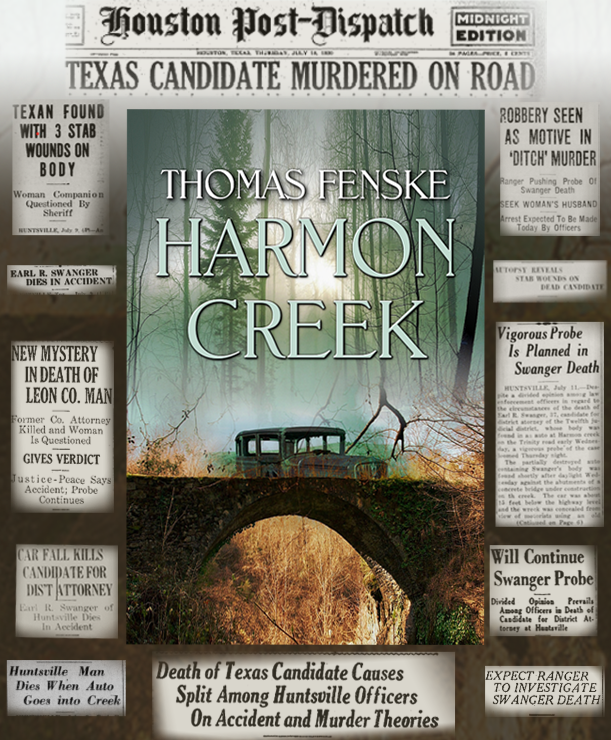
You can see that this story was pulled from the Associated Press news feed. I found many similar articles from small-town newspapers in the Texas area. The death of a political candidate was big news. It even got a huge headline in The Houston Post-Dispatch: TEXAS CANDIDATE MURDERED ON ROAD.

All the early articles had the same basic information: apparent stab wound along with a mysterious woman and man. By the next day, it was reported that the sheriff overruled the other county officials and pushed for the official explanation of the death to be ruled an accident. I think this was when I first started to realize that things were very fishy with this story. His reason? He said the wounds were caused by nails from the construction. This ruling was less than forty-eight hours after the death.

There were other details, to be sure, but they were inconsistent throughout the stories. In a couple, the woman claims she “didn’t kill him but if she could have she would have.” There was also a mention of a possible previous altercation with a man from Houston. I know enough about journalism to know that newswire articles were often embellished, especially at the time.

The most intriguing aspect of the story was how quickly it faded from the public eye. The story disappeared from the news less than two weeks after it was first reported. I mean, gone, disappeared, kaput, nada.

I’ve written murder mysteries, and this seemed to me to be a fertile ground to be explored. Don’t get me wrong, there’s a true story in there too, but I’m a novelist, not an investigative journalist. So, I dusted off my plot generator and percolated all the known facts into what I think is believable crime fiction: Harmon Creek.

More next time!

========================================

Thomas Fenske is a novelist living in North Carolina. Look for Harmon Creek in June, 2022.http://tfenske.com

… My New Release – Phase II

First things first. I realized after pushing out my last post that I neglected a few things about web site development. I’m trying to remember the first web site I created, but it was way back. 1992 or 1993. You read that right. I had a web site before most people knew the wide wide world of webs even existed. I created it by hand. I remember a colleague who I shared it with asked me “what book did you use?”

I blinked. “Book?”

Anyway, using tools to build websites is a new thing. And moving to a single page format like my cheap new web hosting site requires a bit of tweaking to get it right. But I can use things through links. Like it links this blog just great. And I have a perfectly good Amazon Author Page out there, listing all of my books. They pay developers six figure salaries to do a better job than I could ever do with my multiple book pages on my old site.

Enough about that. Here I am a little more than five weeks out and I am slowly gearing up my massive marketing machine. That’s how it feels sometimes. I often tell people that writing a novel is hard, revising the manuscript is harder, and marketing the sucker kicks me in the ass. Yet, with this being my sixth novel, I’ve learned a few things.

There are plenty of people waiting in the wings just dying to take my hard earned money and help me market my new release. I call most of them “preaching to the choir” services. They prey upon authors and, sadly, most of their focus is to other authors. Now, don’t get me wrong, I know that in order to be a good author one must read a lot. But in my experience, most newer authors don’t read very much in the realm of other newer authors. Some do, (and I love you very much) but most don’t.

Then there is the whole eBook/print book thing. My small press is geared primarily toward eBooks, although print books are available and, more recently, available at places beyond Amazon. More on that later. I still don’t understand the aversion to eBooks. I’ve actually read more since I embraced eBooks than I had for years. My Kindle App is loaded on both my tablet and my phone, and it keeps my place on both. If you’ve ever been stuck waiting some place and wish you had something besides a two year old weathered magazine to read, well, pull out your phone and you can just start reading.

Anyway, the key to actually making money in the book biz focuses on getting your books into bookstores. It’s a tough nut to crack for unknown authors. I worked in scholarly publishing for 20+ years and can tell you this: you have to be able to carpet bomb them and that takes capital. See, when bookstores order twenty copies of your book in the hopes that it will sell, they expect that they will be able to return the unsold stock for full credit if the books don’t sell. Huge publishers absorb this cost of doing business. For every best seller they likely have dozens of not-so-best-sellers. Small presses and Indie authors can not compete on a national level so we have to resort to … well, whatever the hell we can.

Here. Now. Me. This. This is what I am doing here, trying to entertain you in a lame attempt to get you to remember my name and even better, my new release, HARMON CREEK. See what I did there? I put in a link. New authors take note. EVERY TIME YOU MENTION YOUR BOOK, put in a link. I don’t have a sales link yet, so I put in a link to a book page I set up on my old website. I have lost count of the book tweets and Facebook posts with authors mentioning “my new book” and they will say “available at Amazon” … yet NO LINK! I should already be navigating there. I guess I should search for you or your book? Really?

Another thing that helps is catchy graphics. Believe it or not, that was originally the purpose of this post, to illustrate the importance of catchy graphics. I’m a writer, not a graphic artist. I do, however, have visual representations that pop into my punkin haid from time to time. All of my book covers were first conceptualized by me. Thankfully, all but one were actually designed by someone who knew what they were doing. The lone cover I designed myself is my free cookbook (companion to my adventure mystery series) and it shows. But I think it matches the cookbook itself, which was designed to mimic the type of local self-produced cookbooks one might find in a rural cafe in the 1980s. I collect vintage cookbooks, I know that genre well. What I came up with, in my lame and crude attempt at design was this:

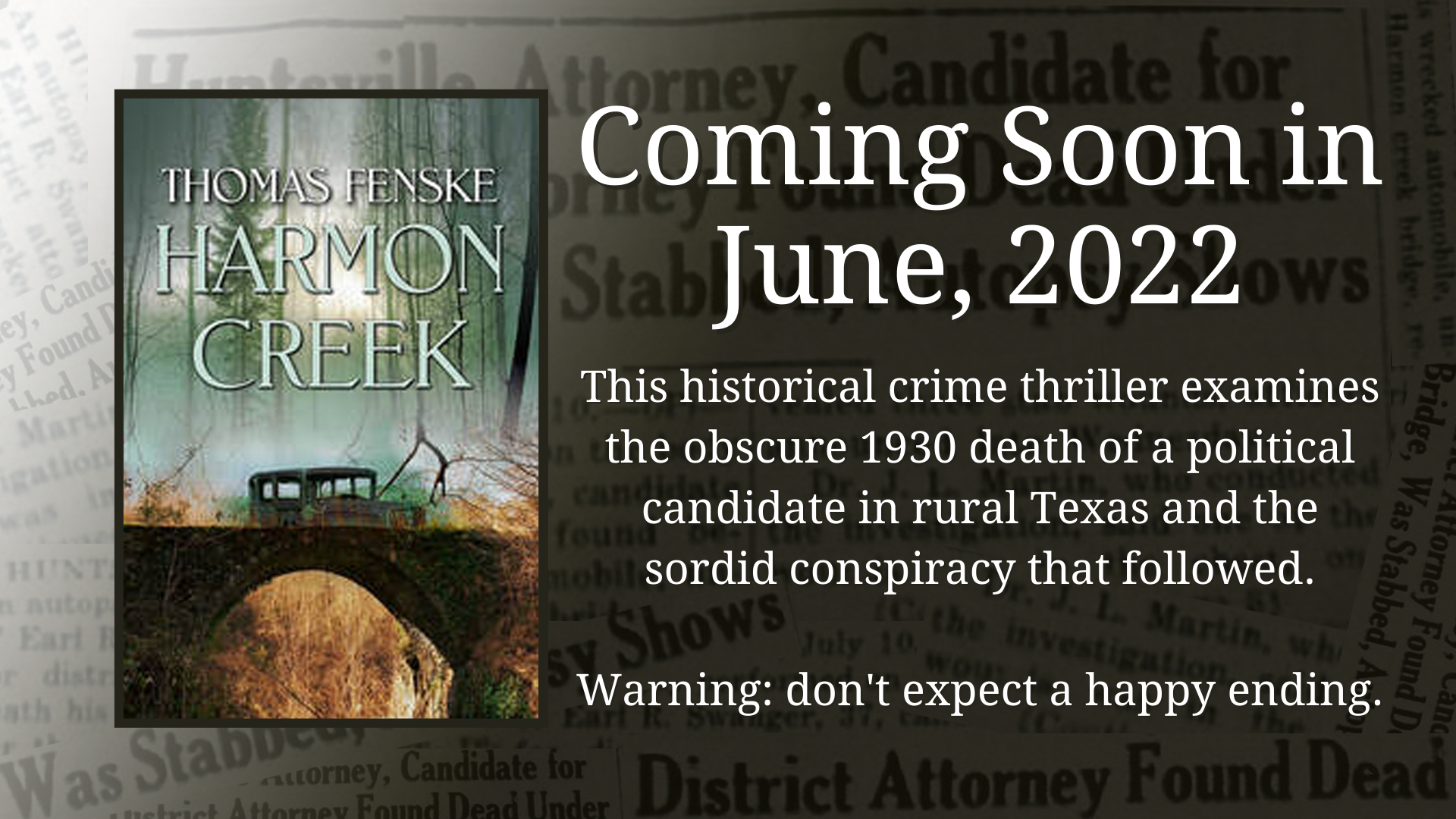
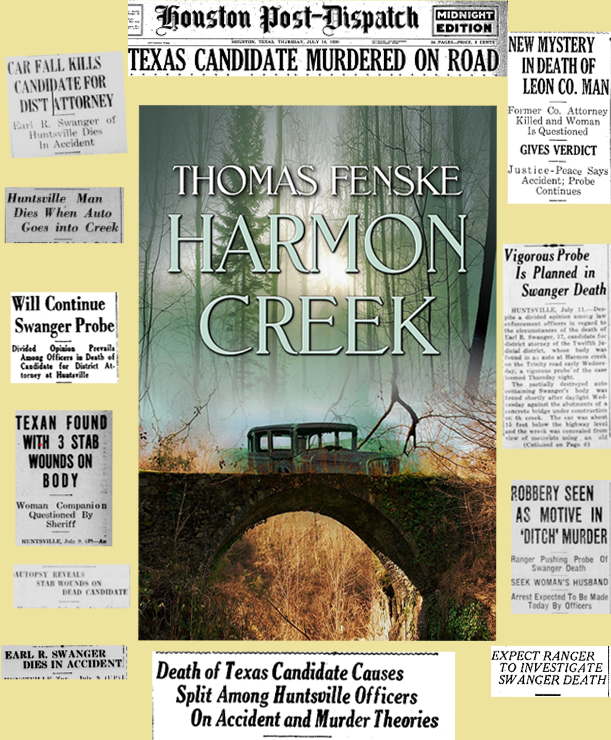
My book cover, surrounded by true life headlines relating to the primary subject matter of the book itself. Not too bad but I knew it could be better. Enter my awesome and talented daughter Audrey. Dancer turned social media expert that she is, she took my photoshop file and made it into something truly inspiring:

Same cover photo, same headlines, but she knew how to do things I did not and she made it both visually stunning and, well, amazing.

So, basically, what I wanted people to know was that the book is based on a true story. It’s personal to our family as well, the subject was her great-great uncle, her mother’s great uncle. I’ll be sharing more about the back story in coming posts, so stay tuned.

===========================

Thomas Fenske is an author living in North Carolina. More information here: https://tfenske.com

The Slow Road to My New Release

I just finished what I call the galley reviews for my June release, HARMON CREEK. Some people might call them the page proofs. What that means is that the book is in the pipeline and it will be foisted upon an unsuspecting public come June 1, or thereabouts.

My media savvy daughter reviewed some materials of mine (I’ve been book marketing for going on seven years now, but still consider myself a rank amateur). Two things she pointed out were my “yahoo” email address (been using it for over twenty years), and my book’s web page domain (thefensk.com).

I’ve used “thefensk” as a marker for a long time. I think it was originally a suggested username on some web site and I liked it. It is flippant and fun, but it doesn’t convey a sense of professionalism. With my new book coming out I want to embrace professionalism.

Sadly, I just renewed my current web provider for two years and also renewed the domain. But that’s too long to wait. They also charge a lot extra for an email address in that domain. So, my other option was to find a good intro deal for a new host, and one that would be more cost effective in the coming years. I was successful on both fronts … so although I’ll still update what I call my legacy site for the foreseeable future, I also have a more forward-looking NEW SITE located at https://tfenske.com!

I’ll be using the new site for most promotion aspects and I could certainly use a lot of help getting it established in search engines, so please click on the link!!!! Yes, this link: https://tfenske.com

=======================

Thomas Fenske is a writer living in NC … look for his new release, HARMON CREEK in June.
More information on this and his other books can be found by starting here: https://tfenske.com

Getting Published – 3

I was in new territory. I had a contract with a small independent press. Very soon I received the edited copy, which meant I had to do something I’d never done before. Now you should know that I had worked with personal computers since, well, since the very beginning. I cut my teeth on WordStar on an ancient CP/M machine. If you don’t know what that is, it’s not surprising. We’re talking old, old stuff. But it was a good intro into word processing and I’ve progressed in that regard since then. I’ve used probably a half dozen word processors. There is no secret that Microsoft Word is the apparent standard, it’s the best overall. Cost is an issue, I know, but you should understand that IT is what the publishing world wants to use. Sure, there are converters and such, but when you get that edited copy back, IN WORD, you’re going to want to be able to work IN WORD.

The edits are embedded in the text using a built-in feature. I knew this was there, I’d been using Word for twenty plus years, but I’d never used it, so I had to teach myself to do so, like yesterday. I was under the gun. They had given me, a fledgling, less than one month to devour all of the prerequisite steps and jump out of the nest. I’m a quick study and I quickly ran through the edits, approving suggested changes or altering as I went along. You have to alter in the edit mode, so the editor can in turn approve your changes. It’s a partnership at this point. The process is tedious, but after a couple of quick back and forth operations, both the editor and I agreed on the manuscript.

Then I waited. Well, not completely. Then I hastily filled out a form from the publisher. It contained a lot of things I’d never even thought of and I tell you this now. Think about these things before you are ready to submit. You should have a few ideas about cover elements before you ever get to the publishing step. You should also be well-set in your concept of genre, something I sort of glossed over. It is surprising to see aspiring writers with no sense of genre. Literary fiction? That’s like setting up your friend with a blind date and saying they “have a good personality.”

I concocted a dedication and “acknowledgment” mention. You also need to come up with meta-tags. If you don’t know what those are, do some research and think about them NOW. Then the dreaded tag lines and descriptions and blurbs. They also want review quotes, but that’s just like rubbing it in for a new author. Reviews? It’s not published yet. Anyway, these short descriptions are the bane of many an author. We can slam out 90,000 words but are stumped by conveying the gist of the story in a mere 200. (Hint: practice the elevator pitch, you are trying to convince someone to read your book while going up a few floors in an elevator). I struggled but completed the task.

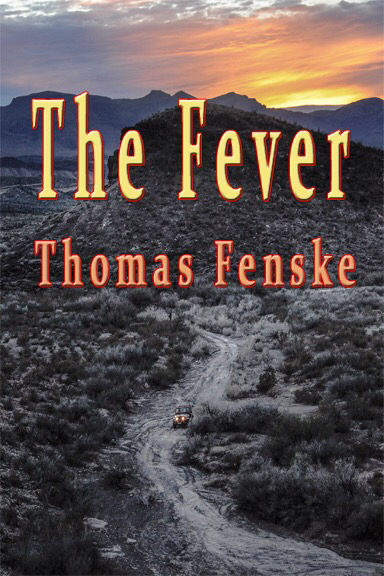
A rushed cover design was submitted to me. Early on I had figured I’d be self-publishing and had secured the rights to an awesome photo, taken in the same general area where the action of the novel takes place. The cover was presented to me. It looked good. I approved. Another step was complete.

While all of this was taking place the copyeditor was going over the text. In a short time, I was soon sent a PDF of the actual book, with the cover, a title page, copyright page, dedication, and then the book itself. In publishing terms this is called a galley. It looked great. I was flush with a sense of accomplishment. Then I read the fine print. I had to review it. Quickly. Time was short. Earlier I mentioned that the edits were tedious. They were nothing compared to the galley review. Line by line, page by page, chapter by chapter. I found perhaps 40 or 50 errors, all of which I detailed in a separate Word document called an errata, copying the line as it appeared, followed by a new line with the correction. This was my first time. It took me almost three days because it is brain numbing work the first time (takes me less time now).

I made a big mistake in this process, compounded by another after the fact. One, I didn’t know one should review EVERYTHING. I reviewed just the manuscript portion. Trust me. Review everything. I’ll tell you why in a moment. The second mistake came when I received the corrected galley as an attachment. As it happened, I was working full-time and I got really busy at work, so I felt confident that all was done and the book would be published on time. Here’s a word of advice: ALWAYS CHECK THE CORRECTED GALLEY. Go through your errata list and make sure each and every correction has been made. Even now, after five published books, I know to review the corrections, and with every book I find a few minor errors were made in applying the corrections, usually one or two. This re-check takes a few minutes and it is well worth it. But this first time, I didn’t know that. I skipped it. More on this soon.

Publication day came and that was when it finally dawned on me that the most daunting task of any author had come to a head. These days I describe authorship this way. Writing a novel is hard. Revision is harder. Marketing the sucker kicks me in the ass. It’s as true now as it was then, except then I had absolutely no clue on how to proceed. See, with a big trade publisher, they’ll shepherd you through the process. They spend money on it and do a lot of background. They invest in the product. But even then, YOU have to do a lot yourself. With a small indie publisher, it’s pretty much up to you. First timer? You have to build from the ground up. So I did what anybody would do in 2015. I googled it. Oh, a web page? I can do that. I had a web page before most people knew they even existed. Facebook book page? Easy. Slowly I built an infrastructure, even this blog was part of that process (although I’ve changed the name a couple of times).

Still, sales were slow, mostly friends and family. Then I got the first bad news. My name was misspelled on the title page (but thankfully not on the cover). I was in horror. It was actually my mistake or two mistakes. In my rush to fill out the author form apparently, one pesky key had stuck and omitted itself from my name. I hadn’t read it over. Then, in the galley review, well, remember when I said check EVERYTHING? I should have caught it then. Yes, we can hope that others will catch things down the line, but ultimately, the blame comes down to me for not completely reviewing the galleys. Guess which thing I check first now? Anyway, if you bought one of those early paperbacks you have a collector’s item. The publisher agreed to fix it. Luckily with Print-on-Demand paperbacks, the damage is minimal and ebooks are easy.

-But-

Readers were reporting more errors. Lots of errors. Familiar errors. This time it was the publisher’s fault. In their haste they had uploaded the wrong file, the UNCORRECTED galley. Again, if I had checked the galley after the corrections, I would have seen it immediately, page one. This one was trickier. They didn’t believe this could have happened. I spent a week convincing them. They had already corrected the name and they had a policy of not wanting to correct every little thing. After all, they had new books for the coming month to work on. In the meantime, I had ceased my lame marketing attempts waiting for the corrections. Finally, they took a look at what I was sending them and realized I was right and it had been their error. Double-checking the galley is not even suggested, that’s my own new rule. Finally, 3 1/2 weeks in, I had the corrected book in print. There were a few other hiccups with the book, but from then on, I considered myself a successful author.

=============================

Thomas Fenske is a writer living in North Carolina. You can find information on his books here: http://thefensk.com