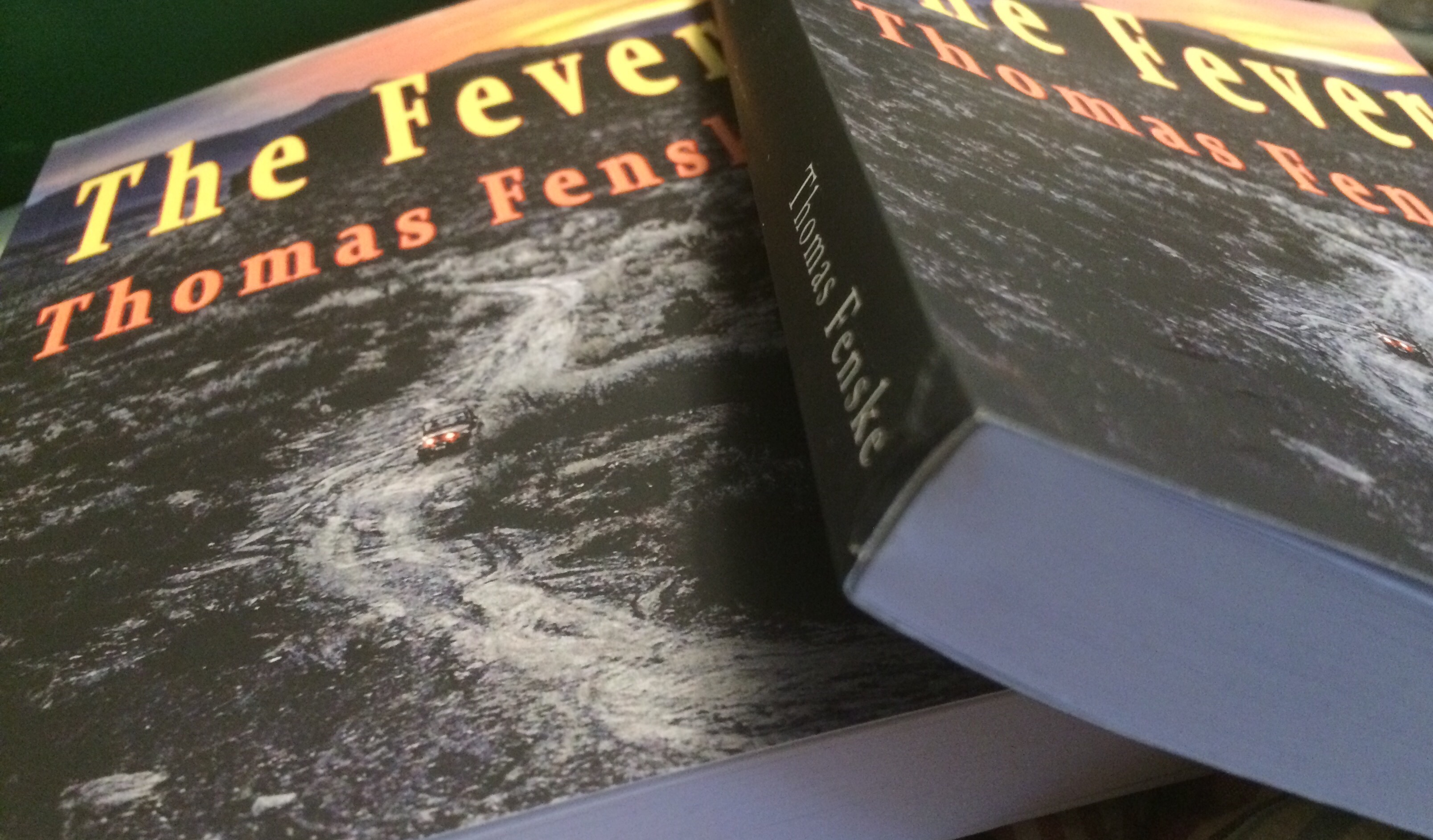
Getting Published – 2

Oops, there was a longer break than I intended due to a computer issue. My new system is up and running, so now I’m back. Last time out I left off with the thought that I started in again on THE FEVER after taking a break to write another draft. That draft was shelved for five years until it became my fourth published novel, THE HAG RIDER, but that is another story. Now, let’s get back to THE FEVER.

I began yet another revision process on THE FEVER and I felt very confident in it. As I mentioned before, previous revisions had ballooned the story to over 130,000 words, but I now had it down to a more manageable 95,000. In late January I felt confident enough to submit my work to a small publisher recommended by one of my NaNoWriMo writing buddies. She’d suggested it the year before but I hadn’t felt confident enough to try, plus that publisher at the time concentrated on their own PDF eBooks. Now they had joined the mainstream and published through a wide range of platforms.

Nothing for a month. Then I got a phone call from an editor. It seems I hadn’t answered her emails.

“What? I didn’t receive any emails.”

I checked my SPAM folder and saw nothing. She finally determined that the problem was on her end. She was calling because she was interested. BUT …

Ah, the dreaded “but” we all hate to hear. There was a major problem. Too much narrative, especially in the section where the main character is preparing for his biggest ordeal. Now understand, THE FEVER is about a character’s singular adventure. It’s a one-person show for the most part. There are minor secondary characters but his lone quest is the entire point of the story. She considered the necessary changes to be fairly trivial and gave me specific chapters to concentrate on.

I had shared the story with a few beta readers and one had complained about the narrative problem. I should have listened to them (listen to your beta-readers!). Another complaint was a minor interaction with a woman he had during one crisis point. It wasn’t believable, several had said. As these thoughts percolated through my mind, I concocted a significant plot revision. I reworked the encounter into a love interest, and the character had someone to work with him during his preparations. This change also facilitated an added twist later in the story, which was also a suggestion of the first beta reader.

It took two more complete revision passes, one to put the changes into effect, and one to make sure all the transitions meshed with the current prose and worked, then I waited for the same beta readers to respond. I’ll never forget the response from one of them. They sent a one-word message. “OMG!”

The editor had almost given up on me, but I explained that in effecting her changes, I had concocted some new plot elements that added a lot to the story while solving the problem she had mentioned. After reading, she said she was impressed. She offered me a contract. It was late May 2015.

Now there are four major paths to getting published. One is the traditional path, where a writer interests an agent or more rarely directly interests a major publisher. For most writers this is just about as accessible as getting a contract to play in professional sports. It is a preferred way, but it’s a long, slow, uphill climb. Second is succumbing to the lure of the vanity press. Big mistake. Don’t do it. You pay and pay and pay and end up with boxes of books in your garage that you have to move to high ground every time it floods. Lately vanity presses try to hide behind a rebranding, calling themselves hybrid publishers. Third is self-publishing. In many respects it costs as much as vanity publishing but you have full control over the end product. You are basically your own general contractor, subcontracting your editing and design efforts. Some do it themselves and many of those give self-publishing a bad rap. Most often your print books are print-on-demand, which isn’t as bad as it sounds and it is good for the environment. The fourth is making arrangements with a small press. Sometimes these seem like vanity presses, but the real key here is that you should never have to front any money. If they want money up front they are a vanity press. A small publisher generally provides editing/cover design/and book design (including uploading for eBooks and print-on-demand), but for a small percentage of the eventual royalties (they use contractors for this). This is what I went with, a small publisher.

The biggest advantage of this was that I didn’t have to front any money. Here’s a dirty little secret in publishing. No matter which one of those four directions you take, your book still has to go through the same journey to publication. It has to be edited and by that I mean not by you. You might be the best editor on the earth but our pumpkin heads don’t work that way: our mind is already translating familiar material and thinking about the next line. Traditional publishers and small publishers use their own people, as do vanity presses, but vanity presses charge you for the effort. In self-publishing you find your own third-party editor, and pay out of pocket as well. This pattern repeats with every other process, including proofing, cover design, and book design. Book design for print has differences from book design for kindle which had differences from other eBook formats. In short, there are a lot of hands stretching out. Traditional publishers bank on you making enough money for them to make it all worthwhile. Small press contractors depend on making a small amount from a lot of books to make it worthwhile. The other two? Well, you pay up front. The thing the traditional presses and small presses know is that you use experience and skill to come up with a good end-product. Vanity presses have your money, they don’t care. Self-published authors, if they are willing to pay for the privilege, can have a good end product as well, but they are prone to skip steps. You can’t skip steps.

So, it’s late May and I have a contract. At first I was told August or September as a publish date, which seemed very soon to me. The contract said July. I called the editor and she confirmed. They had an author pull out and had a hole they needed to fill. For a first-time author, this was definitely going to be a case of throwing the fat into the fire. Stay tuned … more to come (hopefully the computer issues are all in the past.
=======================

Thomas Fenske is a writer living in North Carolina. Check out his webpage: http://thefensk.com

Getting Published-1

Photo by Kaboompics .com on Pexels.com

Well, to get down to the nitty gritty basics, before you can get published or publish your own work you have to write something. And it isn’t good enough to simply write it, after you develop a concept you need to create a structure, then figure out characters, situations, and locales. You need conflict and resolution. You need one or more protagonists and also, ideally, an antagonist. It has to all work together. Your characters need to talk, feel, and be alive within the pages.

I took quite a bit of creative writing in college. Part of it was laziness, if any part of writing can be called laziness. The course applied toward my English degree as an advanced level course and it could be repeated. The coursework was primarily short stories. It taught me one thing: a good short story, and I mean a really good short story, is harder to pull off than a novel. A vast majority of short stories are just that, stories that are short. They can be entertaining, even enjoyable, but most never of convey a complexity that only the best achieve. Still, it’s a good training ground and a novel can be perceived as a huge undertaking that seems insurmountable.

My debut novel. THE FEVER, began as a two page treatment, written on some hotel stationery in the summer of 1986. All of the rudimentary details of the plot are there. Over the years, I started to write it at least four times but I never got more than a few pages in. Once I actually wrote about ten pages. I like to say, “Life intervenes” and I’m sure that is part of the case, but in reality, I just had no idea how to write a novel and I would put it aside out of frustration.

Then one day (for perspective, in late November 2010) I picked up a book, NO PLOT? NO PROBLEM! by Chris Baty. He was the founder of National Novel Writing Month (NaNoWriMo). One could, he said, write an entire novel in thirty days. Nice trick, I thought. But as I read through it, I realized, “You know, I could do this.” As I read about NaNoWriMo, I was mortified to learn that the real event took place in NOVEMBER. I was too late for 2010. But I kept reading. I realized, it isn’t the event, it’s the process. I finished the book in early December and again resolved to myself, “You know, you could do this.” Simple math indicated that all one needs to do is try to write a little less than 2000 words each and every day. I decided to prepare myself and dig in January 1.

The process is simple: you shouldn’t expect to have a fully completed novel in 30 days, but you’ll have a completed rough draft in that timeframe. One of the main things Baty emphasizes in his book is that you can’t edit as you go along. As he says, you have to send your internal editor on vacation. Bogging down on a sentence or a verb or a pronoun is what drives most fledgling writers into the weeds. Don’t get me wrong, it works for some, but it never worked for me. For them each sentence is a masterpiece, carefully place one after the other until you have a … well, like I said, I tried that four times with THE FEVER. Bogged down every time. I endeavored to give this different process a good try. In retrospect, knowing what I know now, I don’t know how you can get chapter two just perfect when in reality you have no idea what’s really going to happen in chapter 23!

It was my New Years Resolution for 2011, to have a rough draft by the end of January. Oddly, I decided NOT to write THE FEVER. This was, after all, a test. I figured THE FEVER was my best idea, but I had other ideas. Even though I had worked out a lot of the plot and different elements I wanted to explore in that story over the years, I didn’t want to waste my best idea on this process if it didn’t work. I couldn’t bear another failure. So I picked a harmless project I had bandied about. I had less of an idea of what I wanted to do, but according to Baty, it really didn’t matter. “Pantsing it” he called it; flying by the seat of one’s pants. I had a locale based on some autobiographical journaling I had done earlier that year, a marvelous old building where I used to work in an older area of downtown Houston. The gist of the storyline was somewhat autobiographical: write what you know.

Get this: I found the process incredibly creative. I created bullet points of a rudimentary outline but as the story progress, I left that far behind as I hammered out sentences intent on making my daily word counts. The story told me where it wanted to go. I became consumed with it, and woke up each morning with a fresh new desire to find out what happened next. When I reached the end, I was elated. I’m still proud of that manuscript, set in 1972 and populated by the hippie-types I knew in my youth. Oh, it’s pretty awful and needs so much work, although I did a little revision work on it later that year, I’ve never completed the revision work. But it still has a soft spot in my heart. One other plus: I actually achieved my New Year’s Resolution!

I turned around and did it again in November, with yet another story idea. I still avoided THE FEVER, I wanted to prove it wasn’t a fluke. I had similar results. Both of the first two manuscripts were written in first person. The original actually works in first person, but the second one should have been third person. I’ve been thinking about picking it up and working through it. It will be a lot of work.

By the next November, I was ready to dive into THE FEVER. I was so pleased with the result, I turned right around and started revisions after I finished the draft. I loved the story. This was when I found out one minor detail: I didn’t know how to revise a story. Oh, I knew I needed to clean things up, expand character development, and add more details. In the first couple of revision passes I did way too much and added extraneous details and descriptions that had little to do with the story. My 50,000 word draft ballooned to 130,000 words. It was bloated and heavy. It had lots of good stuff, but many things didn’t apply to the real story and true to the first two manuscripts, far too much autobiographical information. Some of it applied to the core storyline quite well, but I realized 130,000 words was far too much for a debut novel, so as I got better at reviewing my writing, I cut and honed. I call this crafting the story.

I eventually allowed a few trusted souls to read the drafts and got some valuable feedback. I kept plugging away. I basically skipped the next two NaNoWriMos, well, I cheated and worked at revisions one time and worked through my journaled autobiographical info another time. But NaNoWriMo is fun, you can buddy up with other writers, track each other and encourage each other. Picked a few long term friendships there. One of those contacts suggested I approach her publisher. I didn’t at first, because I didn’t think it was ready and her publisher seemed to be mostly interested in Romance books.

I was coming up on the third NaNoWriMo since I’d written the draft and, to be honest, I was burned out. One of my NaNo buddies strongly suggested I just dive in on a new project to clear my mind. It almost seemed like I was cheating on my novel, but I did it. Totally fresh idea, completely different story. I hammered out the word counts just like the other three and before the end of the month I had another rough draft. I liked it, and thought it had a lot of promise, then I shelved it and dug back into THE FEVER. My mind was ready to take it all the way.

I’ll leave off here. Next time, I’ll relate the next stages of getting it published.

===========================

Thomas Fenske is a writer living in NC. More information about him and his books: http://thefensk.com

A Win is a Win!

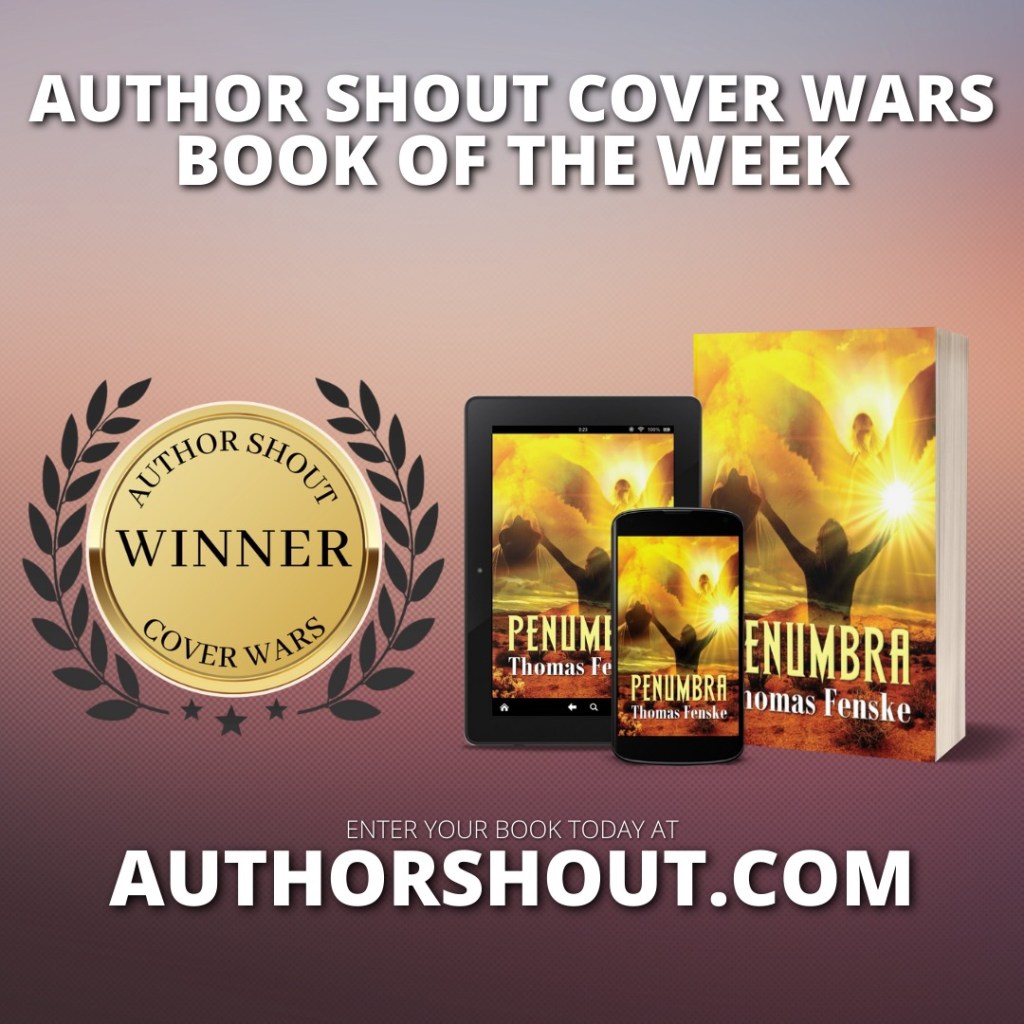
Yes! I entered the cover of my last book, PENUMBRA, in Author Shout’s weekly Cover Wars competition and managed to win over several other very nice covers.

To celebrate this win, I’ve put the kindle edition of PENUMBRA on sale for the next week. It’s a great chance to pick up a good read for 99 cents (99p in the UK). Get it here:

https://www.amazon.com/dp/B08D7267W7/

It’s the fourth book in the Traces of Treasure series but is a good tale all by itself.

======================

Thomas Fenske is an author living in North Carolina USA. http://thefensk.com

It Can’t Already Be April

I’ve been absent from this blog for quite a while and that can only mean one thing: I’ve been writing!

All authors have their own process. For me, it means hammering out a rough draft in a very short time, then spending a lot of time pouring over it, correcting, adding, deleting. Some prefer to painstakingly pour over the manuscript, working on each sentence in progression until it is perfect. That never worked for me. I get a few sentences in and something else attracts my attention and those few pages I managed to complete languish forever in some kind of writer’s purgatory.

No, I like to dash it off, working from a plan, to be sure, but for the most part I let the story tell me where it wants to go. Make that: let the story tell me where it needs to go. The plot develops from the outline, but strays if it needs to. Writing fast is creative and when a writer is on a productive streak new ideas just pop up out of thin air. What I end up with is a complete draft, the story exists from beginning to end. The editing and revision process is tedious, but then again, these actions should be tedious. I call it crafting the novel and it is a lot easier for me to continue to work on a the thing. It’s like building a house. One doesn’t erect the door and get it perfect and painted, then start adding walls in successive building sessions, then flooring, then ceiling and roof. One gets the framework in place as quickly as possible and the roof in place, and only then will they concentrate on the interior, gradually adding and improving until it is complete.

Anyway, my latest work in progress, a crime novel I call HARMON CREEK, is in the late stages of that process. It is based on a true crime. Well, sort of. It’s about my wife’s great uncle, who mysteriously died in 1930. He was a candidate for District Attorney in a mostly rural area of Texas. She’d told me about it several times. The family contended it had been murder, pure and simple, but whoever perpetrated it was never caught. I researched quite a number of newspaper articles about it. Various local papers reported on the case for several days. He died in a one-car accident at the site of a new bridge construction at Harmon Creek in Walker County Texas. Details were sparse, but one interesting detail emerged: stab wounds. There was also a statement from a woman who had purportedly accepted a ride from the man, but exited the car prior to the accident and procured a ride from a friend she had noticed following them. It seemed quite innocent but they never quite tied in any detail that explained how they found her and she and the “friend” were never identified. That was how the first article presented things.

The next day it was reported that she’d added to her story, but to a Dateline aficionado like me it sounds more like she changed her story, which is always an indicator that a lie is involved. The Sheriff also floated a new theory: the puncture stab wounds were likely caused by nails from the nearby railing when his car crashed through it. I thought, puncture wounds on a moving victim from a stationary object. Hmmmmm. Within thirty-six hours of the wreck, he pushed the local authorities to declare it an accident, albeit with weak protests from the justice of the peace and medical officer.

That’s pretty much the gist of the story. There were follow-up stories for several days. The governor dispatched a Texas Ranger to aid in the investigation and the woman changed her story yet again, this time adding a contention of inappropriateness to her story. She was still unnamed. None of this was part of the family lore but the guy was obviously a straight shooter good guy. He’d formerly been county attorney and was now going up against the incumbent for the next step up the ladder. The family contended the incumbent was quite dirty. The most troubling aspect of this story for me was the fact that the progression of news stories simply stopped cold. After about a week there was no more mention of his death, of the investigation, of anything. Gone. Kaput. Nada.

So I compiled the limited facts and anecdotes and used a mystery writer’s eye (and like I said before, a long association with Dateline and 20/20 programs), and pieced together a progression of possibilities. With an incumbent district attorney involved, it seemed too easy to think the guy had simply been bumped off. It is rarely that simple. So I built a progression of cascading events using what I thought to be plausible actions and counter actions. I don’t want to offer spoilers, but I think I explain all of the questions raised in my mind by the various news articles quite nicely. To me there was an obvious reason the case simply disappeared.

And, of course, the country was in the beginnings of the great depression, and the election followed in two weeks. After that, basically life went on.

I have to admit, there was some fun involved in writing this too. I introduce a glimpse into lower echelon criminality, and had a bit of fun digging up criminal slang of the 1920s/early 30s. Here we see the mysterious unnamed “woman” and her “friend” concocting the beginnings of a plot at the behest of the DA’s underling.


“I got a special deal, a sort of blackmail deal.”

“Branching out, are you?”

“McIntyre wants me to frame a john.”

“Not me, I hope,” he quipped.

Betty laughed deeply, “I already have the goods on you.”

“So let me see if I can guess. He wants a Sheba who’s known to skate around to be seen in public with some weak sister.”

“That’s the crop. I’ve got the goods to play the end game, but I’m not much with the planning.”

“Which is why you want me in on the deal. What’s my end?”

“I figure maybe a yard, but I might be needing more help than just a plan.”

“A cool C note? Tell me more.”


Another side story involves Claude. I had to include Claude. One of the most intriguing parts of my wife’s family stories involved her great aunt, the victim’s widow, and her … well I don’t quite know how to categorize him … her friendship with a black man named Claude. Think Driving Miss Daisy’s Hoke Colburn (Morgan Freeman’s character), except Claude wasn’t exactly an employee. Nothing romantic, nothing like that. To hear my wife describe him, he was oddly devoted to her great aunt, almost like a compulsion or a duty. That’s how it seemed to me. So, Claude has a big piece of this story, which I ultimately use to explain his later devotion to the great aunt, even thirty years later.

I’m still smoothing out the kinks, but I think this will be my best book yet. HARMON CREEK, look for it.

=======

Thomas Fenske is a writer living in central North Carolina.

Look for more information about his current works at http://thefensk.com

It’s All About Marketing

If we were having coffee today I’d be gently raising my mask to take a quick sip while I related my elation to some good book news.

Writing a book, or several books, occurs in several stages. Of course, there is the original concept, structure, and actual writing. After that, an author must pore over their manuscript, tweaking, nudging, adding, subtracting … I call this revision stage “crafting the novel.”

If one is fortunate enough to publish, after the requisite editor back and forth and acceptance of the finished manuscript, the most daunting task begins. You have to sell the damn thing. Marketing generally kicks me in the ass. That’s an official publishing term.

This weekend I have embarked upon my most aggressive marketing campaign ever … I paid for some outside promotion of my entire four-book series on Kindle. For me, it was not cheap, I have been fairly conservative in spending money on promotion. Spend a buck to make a buck, right?

The series promotion expects that the first book in the series will be either free or very cheap. I went with offering it for free. Amazon lets one offer a kindle book for free for five days. They also let one offer a discount price for seven days. I used that second function to offer the other three books at varying discounts. The result? Readers can acquire my entire series for $5.97. Normally that would be $15.96. Four books for under six bucks!

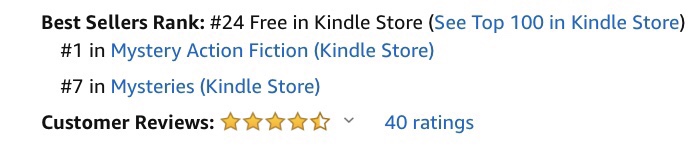
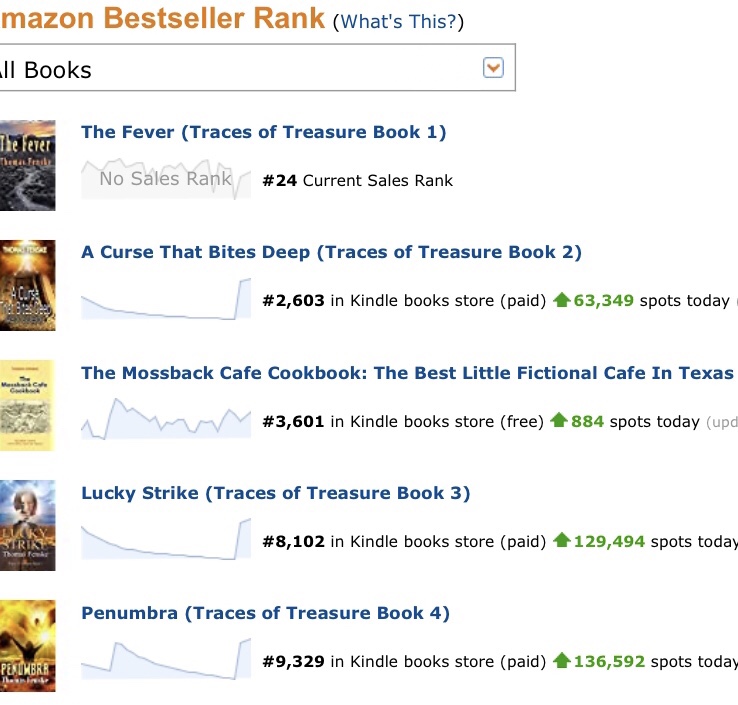
The sale continues through the weekend but the results so far have been encouraging. So far, I’ve given away 4029 copies of THE FEVER. That’s like introducing myself to 4029 new readers!
BUT — 117 readers also bought book two, A CURSE THAT BITES DEEP, AND 52 more took a chance on book three, LUCKY STRIKE, AND 46 bought book four, PENUMBRA! I even saw an uptick in my self-published companion cookbook, which is always free anyway.

Will I make my money back? Not quite; not yet. But an author must not only sell individual books, they must also sell themselves. In that respect, this has been quite successful. My hope is that people who like THE FEVER will want to go back and see what other trouble the characters get into in Books 2-4 and be willing to chance another $3.99 on them. They do seem to get into a lot of trouble and each books is better than the previous one.

I have also seen in the past that Amazon backs up increased sales (even free sales) with additional targeted promotion. I’ve even had them suggest my own books to me in the past … this is a real thing.

The sale continues through the weekend. Check it out here: https://www.amazon.com/gp/product/B087JD9CJD

CATCH THE FEVER!

================================

Thomas Fenske is an author living in North Carolina.
Get the full scoop at http://thefensk.com

Countdown to Penumbra – 2

penumbra-web

There are two days until the release of Penumbra!
It is the fourth book in my Traces of Treasure Series.

I guess it is time for another review!  Bonnye Reed is another prolific Goodreads reviewer with almost 2900 reviews posted. She’s reviewed several of my books and I am gratified that she has so far liked my work:

**********************************

I am pleased to refer Thomas Fenske to friends and family. He writes a tight, intriguing story set in the desert southwest – or as we know it, God’s Country. His characters are contrary but honest, and his background and scenic descriptions are spot-on. The addition of mystical and possibly unhappy spirits is an added bonus. I have enjoyed everything I have read from Thomas Fenske, and this is another five-star effort.

Penumbra is stand alone, the fourth in the series Traces of Treasure. Sam and his girlfriend Smidgeon along with several of their friends get drawn into another intriguing search for missing treasure. They travel over the desert SW, driving from Van Horn, TX north into the White Mountain Wilderness north of Ruidoso, NM, and back around and through the Mescalero Reservation and Tularosa, Alamogordo, and several trips through Roswell – back in the age of payphones and Roswell without aliens everywhere. It was a good trip, very nostalgic and satisfying. It was also back in the ago of mandatory 55 mph all across the US, but the drudgery of travel in that time period is left out thank goodness. Most of us remember that all too well. .

Mixed into Penumbra is a posse of good friends, conscientious law enforcement, polite, helpful people, and excellent food – I enjoyed that part of traveling back in the day. You will, too. And the bad guys are satisfyingly bad. Definitely a win-win novel.

**********************************

I am blushing when I read such high praise. You can judge for yourself.
Penumbra will be available on Amazon Saturday, August 1, in Kindle, KindleUnlimited, and Paperback.  Pre-order Kindle NOW at Amazon!

======================================

Thomas Fenske is a writer living in North Carolina.
You can find more information about him and his writing at http://thefensk.com

Countdown to Penumbra – 3

penumbra-web

There are three days until the release of Penumbra!

Today I’d like to share a little bit about the story. This is the fourth installment of the Traces of Treasure Series and, like the others, it involves a search for a treasure. The first three eventually became a trilogy, one story led directly to the next. I fooled myself into thinking they could each stand-alone, and to some extent, I guess they can, but they are definitely tied together. Penumbra, though, is a story unto itself. We have the same characters, but we are not as concerned about their past exploits this time. Events move quickly and although there is some sense of their community of friendship, they are too busy doing what they are doing to bother much about the past.

What they are doing is trying to find the lost boyfriend of an acquaintance of cafe owner Smidgeon Toll. Of course, the pendulum of fate has made another pass: HE was on a quest for a lost treasure. In order to find him, Smidgeon and her boyfriend must enlist the aid of their friends to first get on his trail, then discern more about this treasure he was after. Along the way, they encounter a huge, centuries-old mystery, confront a crew of bad guys who kidnap and murder their own way in pursuit of the loot. New friends join the quest as well, including Ximena, who I mentioned a few days ago.

Another new friend is Bea Welbourne, a special collections librarian at a nearby university. Bea has no reason to become involved, but she’s intrigued by the tale she’s heard and is even more intrigued by the trail of clues she manages to uncover. She’s no stodgy librarian, she is smart, fit, and can hold her own out in the wilderness. When told she doesn’t need to help them, she simply responds that she enjoys a bit of excitement. She certainly gets more than she bargained for.

I don’t want to say too much more, because I’m getting into spoiler territory, but suffice it to say, there are many veiled layers concealing the core of this mystery. All the pieces fit together, but it takes a while for our hardy crew of treasure-hunter, investigators to a conclusion.  It is full of twists and turns, with criminals lurking and popping up when you least expect it. And there are several supernatural things complicating matters at several turns. Oh, and the cover? You’ll see all of that in the story.

If you haven’t read any of the other three books, don’t despair … you can read this one first if you want, but be warned: you’ll end up wanting to read the other three.
Penumbra will be released on August 1. The Kindle edition is available for pre-order on Amazon right now.

=============================

Thomas Fenske is a writer living in North Carolina.
You can get more info at http://thefensk.com

New Release >> THE HAG RIDER

You've never read a Civil War tale like this! (1)I’ve just released my fourth novel, The Hag Rider. It is historical fiction set during the Civil War and because of that setting, it covers subject matter that can generate an emotional response in many people. In normal times I’d let it go at that and leave it to the reader to draw their own conclusions. But because of the nature of the book, I want to offer just a little more introduction.

It is written as a Civil War memoir from the viewpoint of a Confederate cavalryman, who was just fifteen-years-old when he enlisted.  Early in the book, we met Jack, a broken boy in Texas who runs away. He manages to discover parental love and wisdom through Moze, an enslaved man who in essence becomes his family.  Moze is anxious and reluctant when Jack is enticed by fiery secession fever and decides to enlist, to join the Civil War campaign. Concern for Jack leads his mentor to seek protection for his young friend through the only source available to him. A local witch,  Vanita, who is also a slave, embodies a source of mysterious power in spite of her life situation. Jack makes his way through the violent and confusing time of war, with her help, and through his reflection on lessons gleaned from Moze’s discourses about dignity, respect, and humanity.

Yes, it is set in the south during the Civil War, but this book is far from a glorification of the antebellum era.  At its core, it is a soldier’s story told through young eyes. Jack is against slavery and he strives to overcome the prejudices of the time while at the same time knowing he is a product of those times.

The Hag Rider is available from Amazon, in Paperback, Kindle, and KindleUnlimited.
Buy it here>>>–>>https://www.amazon.com/Hag-Rider-Thomas-Fenske-ebook/dp/B088QX1LHW

WeekendCoffee Book News

If we were attempting to have coffee today, I’d be lapsing into book news again. Sorry. I know it gets tiresome but I try to not make it so. Ah, but with a new release coming out Monday, June 1 … it’s an exciting time. A new release always is.

But I know I’ve talked about The Hag Rider several times in recent weeks, so I’ll just say the kindle edition is now available for pre-purchase on Amazon. <—<< click there to check it out.

In other news, this is not my only new release this summer. August 1, I will be releasing the fourth book in the Traces of Treasure Series, Penumbra. I consider the first three books in the series a trilogy, but I’ve always thought the second and third books could stand on their own — but a reader gets more enjoyment if they’ve read the first and/or second books. With this fourth book, the story stands on its own … yes, you’ll want to know the characters better but they (and the reader) are so consumed with the evolving mystery, the past is soon rendered moot.

That said, I want to unveil the new cover’ I consider this one to be the most awesome cover of all my books.

I’ll reveal more about the book later, but I want you to know I think this is the best book of the series so far. Like I said, it is due out in August.

In other news, in honor of this unveiling, I’ve put the kindle editions of second and third books of the series on sale for 99 cents. Sorry, I already had a special on the first book in April and it will be a while before Amazon lets me do it again. My hope is that if you have read The Fever, you will jump on this opportunity to experience A Curse That Bites Deep and Lucky Strike. They should both be on sale in the US and UK for 99c/99p starting sometime today through next Thursday. Update: I created a link to both books on my web page: https://thefensk.com/spec.html

As restrictions ease, please stay vigilant. I suspect this thing is not over. Just exercise common sense, please. Stay safe.

====================================
Thomas Fenske is a writer living in NC. More information on his books can be found at http://thefensk.com

Two-Week Countdown

You've never read a Civil War tale like this! (1)If we were having coffee today, somehow, somewhere, I’m sure I’d mention the upcoming release.  My latest novel, The Hag Rider, is due out in two weeks!  Once all the writing and revisions are done, the editing and resulting changes are in, the copyediting and final review of the galleys are done, and the cover art is approved and ready … then an author must wait.  And wait.

If you self-publish, you can go ahead and push it out.  If you have a publisher, you wait for them to work it into their schedule.  It’s good, it teaches patience. It allows you to get a few pre-release reviews too, and in some instances gives you the ability to put in a few last-minute corrections your sharp-eyed early reviewers spotted.

So here we are … two weeks to go.  I’m working on some promotions but it is still just a tad early … I need the buy links to be in place.  I think that will be soon.

It’s got five good reviews now … check the book blurb and the reviews for The Hag Rider here: https://www.goodreads.com/book/show/53125987-the-hag-rider.

Wait, what? What the heck is a hag rider?  Okay, we’re friends, so I’ll crack the door open a bit.  The entire story is loosely based on my great-great-grandfather, who enlisted in the 26th Texas Cavalry at the tender age of fifteen.  He listed his date of enlistment on his Confederate Pension application in the 1920s.  In fact, I think he flubbed his birth date (he was already in the initial stages of dementia at that time), but enlistment dates were checked against existing records (of which there were a surprising number).  If we took that date he would have been fourteen, but I prefer to use the birth date on his death certificate, which would make him fifteen.

I don’t know anything more about his service except his affirmation on his application that he never deserted.  There is, however, a very nice, if brief, sketch of the 26th Texas Cavalry written by its commander, Xavier DeBray, a French-trained military officer who relocated to Texas.  The 26th spent most of its time patrolling along the Texas coast and participated in the retaking of Galveston on January 1, 1863; it had been occupied by the Federal blockade fleet the previous October.  Later the 26th participated along with other forces trying to stop General Butler’s Red River campaign in 1864.

I read a lot of soldier biographies, where one gets a better sense of the war. So many people focus on the officers and the elites.  I then decided to scan for his name in an electronic version of The Official Records of the War of the Rebellion.  It is a huge work, comprising many volumes.  It usually takes up two or three shelves in the library stacks.  It has the records from both sides, action reports, orders, all sorts of stuff.  Officers from both sides participated in cataloging all of the information over a number of years.  Anyway, I searched for his name, John Benson, and got a single hit.  A John Benson, origin unknown, was released from Fort Lafayette in NYC in the Spring of 1863, for exchange at City Point VA, which was a common thing in 1863.

I knew it was almost certainly NOT my ancestor but still … I wondered to myself, “What if?”

As I did more research, I began to formulate a believable scenario … my problem: how to get young John from Texas to NYC so he could be repatriated to the South in the spring of 1863.  This was the spark that gave me the idea for the entire story.  I think my fiction works and is believable.

Anyone who has read my other books knows, I love to put a subtle bit of paranormal into all my stories and this one is no different. The Hag Rider is the person who helps John, who is usually known as Jack in the story. He is sometimes called Captain Jack — a nickname foisted upon him in jest by his mentor, an old man, a slave, who teaches him a lot about life in the early part of the story. The Hag Rider is an old woman, a mixed-blood with some Native American and white ancestry, but her black ancestry has kept her a slave. She’s a hoodoo trick doctor, and an aquaintance of the old man.

When young Jack is attracted to the hoopla surrounding secession and aspires to enlist, the old man falls ill with grief.  He hires Vanita, the trick doctor, to protect Jack throughout the war.  Her weapon of choice is called hag riding.  It was a folkloric explanation of the time for night terrors; people would assume they’d been hag-ridden by a paranormal entity sitting on their chest. In Vanita’s case, she uses it as a way to instill something akin to a post-hypnotic suggestion in an effort to aid young Jack.

It is written as a Civil War memoir.  Yes, Jack serves for the confederacy but he is no fan of slavery and is quite confused by the many issues bandied about. Once in the cavalry, he feels honor-bound by his duty to his fellow soldiers and his unit.  He is captured and transported to that prison in NYC (the details work themselves out logically), then makes his way back across the south to his unit. Along the way … he finds that Vanita is following him every step and coercing help as needed through her tremendous power.

All initial reviews are very positive.  People seem to really engage with the story. It is not pro-Confederate; if anything it is anti-slavery, although, in the context of the story, Jack admits there is nothing much he can do about that institution except treat everyone he comes across decently, as his mentor always taught him.

I tried to write through him and show the war as a product of the times, in a matter-of-fact style, just like many of the other memoirs I read during research.  As Vanita tells him, she’s looked ahead and seen the outcome and knows the South is going to lose and understands that this war is a necessary thing to get rid of slavery once and for all.  She tells him she’s helping because he is going to be fighting to lose. Word of caution: don’t mess with Vanita Valine.  Seriously. Just don’t.

==================================

Thomas Fenske is a writer living in North Carolina. Keep checking his web page for information about The Hag Rider … this is a book everybody will want to read, it’s not quite like any other Civil War story you’ve ever read and is suitable for YA as well as anyone else.  http://thefensk.com